Updated June 2026
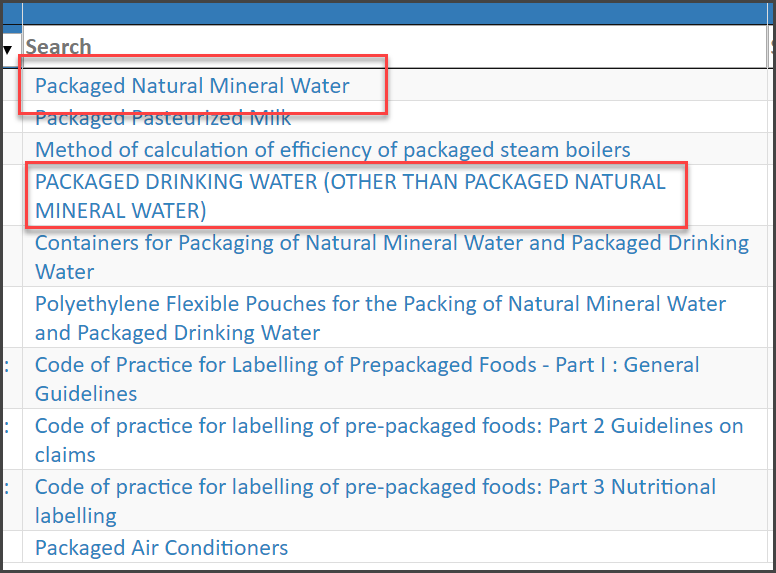
As of January 2026, the regulatory landscape for bottled water has shifted. With the removal of mandatory BIS certification, Packaged Drinking Water is now classified under the FSSAI1 High Risk Food Category.
Though there is not much change in the layout; however, equipment hygiene will be top priority in the High-Risk Category2 audits of the Fssai. We shall walk you through the Layout Design process.
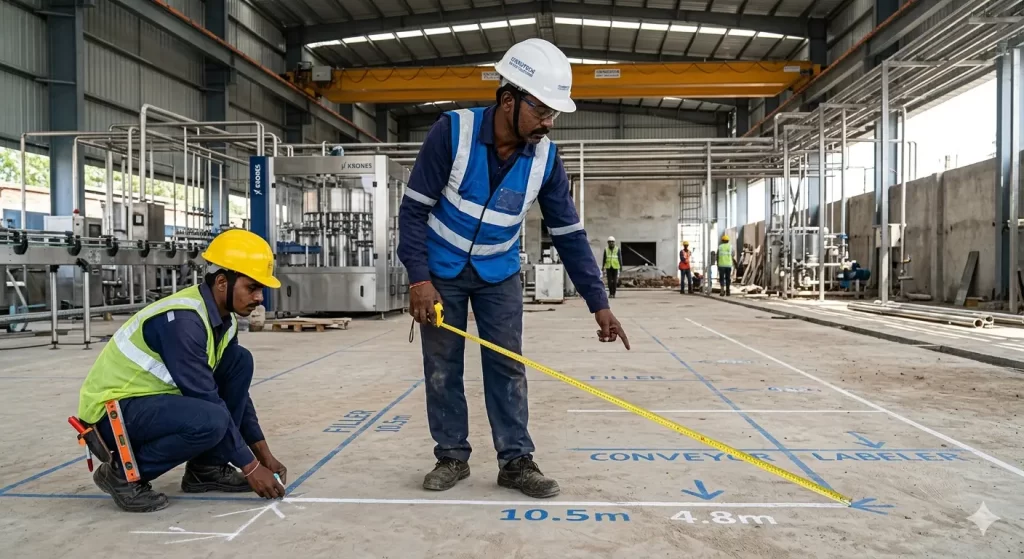
A Packaged Drinking Water Plant Layout design is a critical milestone in your project setup. In 2026, it serves as more than just a floor plan; it is a strategic tool to improve overall plant efficiency and ensure compliance with the FSSAI High Risk category standards.
Did I Forget to Mention This ?
Do not demarcate your Factory Plot Size yet
Before creating a proper lay-out, it’s not advisable to build your shed & mark boundaries of your allocated Plot. This will ultimately also decide how much land you require for the plant ( dedicated post )
And if you are a truly long term thinking EBITDA3 focussed business owner, you will also think of encorporating the Solar Power & Rainwater Harvesting Options in your Plant Layout Calculations beyond the basic considerations listed below.
With the transition from mandatory BIS to FSSAI-led audits, your layout must now strictly adhere to Schedule IV hygiene norms. A well-planned design prevents cross-contamination, optimizes man-material movement, and ensures your facility is audit-ready for mandatory pre-license inspections.
Below, we break down the design process into 4 Technical Steps to help you achieve a balance between operational flow and regulatory excellence.
Steps to Arrive at your Plant Layout
Step 1: Determining Plant Capacity & Audit-Ready Flow
Before a single brick is laid or a machine is ordered, you must define the “Operational Core” of your project. In the current FSSAI High Risk environment, your capacity decides your floor space requirements.
Key Considerations for 2026:
- The 3-Zone Separation: Unlike older designs, 2026 standards require a strict physical separation between the Raw Water/Pre-treatment Zone, the High-Hygiene Filling Zone, and the Packaging/Dispatch Zone. Your layout must clearly demonstrate this “one-way flow”4 to pass a pre-license inspection.
- Reverse Engineering for Efficiency: Start with your target output (e.g., 2000 LPH). Calculate the total “Footprint” of the machines plus a mandatory 2.5 to 3 feet of free space around each unit for maintenance and “Sanitary Access.”
- Expansion Scalability: A layout that is too tight is a financial liability. We recommend designing for 20% more space than your current machinery requires to allow for future upgrades without breaking FSSAI structural norms.
There is No “Follow This” Kind of guide here. As a business owner, you should be very flexible & yet very firm on your overall strategy. It needs a very good understanding that your business should ultimately offer you moderate ( 25% ) Return per annum OR 100 % Return in the 1st 4 years. During this, you should be very down to earth while deciding investment/s.
The “Strategic Readiness” Checklist:
- Water Source to Product Flow: Does the water move in a straight or U-shaped line without crossing back over itself?
- Floor Slope and Drainage: Does your layout account for specialized industrial drains in the “Wet Zones”?
- Human-Material Conflict: Are your staff entry points separate from your raw material (bottles/caps) entry points?
Step 2: Machinery Dimensions & The “Human Fatigue Factor”
Once your capacity is fixed, the layout must be reverse-engineered based on the actual physical footprint of your equipment. A common mistake is measuring only the machine itself; you must account for the “Operational Envelope”—the space required for a human to interact with that machine safely.
During our 10-day training program, we walk you through a live calculation to arrive at your exact machinery specs. This ensures your layout isn’t just a drawing, but a technically sound blueprint for your specific production goals.
Key Engineering Considerations:
- The Maintenance “Service Zone”: Every machine (especially the water treatment and the Filling section ) requires a minimum of 2.5 to 3 feet of clear space on all sides. This ensures that your maintenance team can reach the motors and filters without moving other equipment—a key requirement for Strategic Readiness.
- Human-Machine Interface (HMI) Access: Position your control panels so they are easily accessible without the operator having to cross over conveyor lines. In a high-speed environment, every extra step an operator takes contributes to “Human Fatigue,” which directly impacts your ROCE5 through downtime and errors.
- Vertical Space & Piping: Don’t just think in 2D. Your layout must account for overhead piping and electrical trunking. In the FSSAI High Risk category, open overhead wiring is a major non-compliance. Your layout should plan for “Clean-in-Place” (CIP) pipe routing that doesn’t obstruct movement.
“I often see entrepreneurs try to fit a 2000 LPH plant into a 1000 sq. ft. room. While it fits on paper, the ‘Fatigue Factor’ kills the business within six months. A cramped plant is a high-cost plant. Give your machines—and your people—room to breathe.”
Step 3: Designing Man-Material Movement (The Hygiene Logic)
A professional layout must act as a one-way street. The primary goal of this step is to ensure that “Man” (operators) and “Material” (raw inputs and finished goods) move through the plant without ever creating a risk of cross-contamination. This is a core requirement for Schedule IV compliance.
Key Considerations for High-Risk Audits:
- The “One-Way” Flow: Raw water enters at one end, and finished, palletized cases exit at the other. There should be no “back-tracking.” In our consultancy, we call this the Linear Efficiency Model—it reduces both contamination risks and power consumption.
- Segregated Entry Points: Your operators should enter through a dedicated “Change Room” with hand-sanitization stations. Raw materials (like preforms,caps, labels) should have a separate entry hatch. This physical separation is what auditors look for in the High Risk category.
- Waste Management Zones: Your layout must include a dedicated, isolated area for “Rejects” and “Scrap.” Placing your scrap bin near the filling line is a major non-compliance in 2026. This has to be necessarily out of the packaging area.
- The Human Fatigue Factor (Movement): Minimize the distance an operator has to walk to perform a routine check. Every meter of unnecessary movement is “Lost Time” that eats into your ROCE.
The Strategic Readiness Tip:
“A layout that looks good on paper but forces an operator to walk through a ‘wet zone’ to reach a ‘dry zone’ is a failure. We design for Microbial Safety first, and speed second. This is how you pass an FSSAI pre-license inspection on the first attempt.”
Step 4: Final Machinery Placement & FSSAI High-Risk Compliance
In this final stage, we translate the “Logic” of Steps 1-3 into a precise, dimensioned floor plan. This isn’t just a drawing for your contractor; it is a legal document required for your FSSAI High-Risk license application and the mandatory pre-license inspection.
The Final Compliance Checklist:
- The “Sanitary Wall” Separation: Your layout must show a physical partition (glass or aluminum) between the Bottling Hall (filling) and the Water Treatment Plant. In 2026, keeping them in the same open hall is a major non-compliance for the High-Risk category.
- Drainage Slope & Coving: Your drawing should specify that all floor-to-wall joints are Coved (rounded). This prevents bacterial growth in corners—a detail often missed by general architects but caught by FSSAI auditors.
- Utility Routing (Air & Power): Ensure that your air compressor and electrical panels are placed in “Dry Zones” away from the filling line. Steam and water lines should be routed to minimize “condensate drip” over open bottles.
- Audit-Readiness (The Buffer Zone): Always leave a “Buffer Zone” at the end of the line for final inspection and Shrink Wrapping. A cramped dispatch area leads to pallet damage and logistics bottlenecks, directly impacting your financial sustainability.
“We always tell our mentees: Do not start civil work until your layout is frozen. Changing a partition wall or a drain pipe after it’s built is ten times more expensive than changing a line on a drawing. Strategic readiness means getting it right on paper first.”
How to Upload Your Completed Layout to the FSSAI FoSCoS Portal
Once your technical 4-step layout is finalized, the next hurdle is the FSSAI FoSCoS application. While the portal provides a generic sample document, it often lacks the technical detail required for a High Risk water plant inspection.
In the video walkthrough below, I demonstrate the exact process of uploading your layout to FoSCoS, highlighting where to include your machinery specs and flow diagrams to ensure your application is audit-ready.
How to Get Exact Machinery Dimensions for Your FSSAI Layout
A common mistake is waiting until the plant is built to measure your machines. For a successful FSSAI FoSCoS application, you need these dimensions before you finalize your blueprint.
When you receive a quote from your machinery suppliers, do not just look at the price. Request a Technical Specification Sheet that includes the exact length, width, and height of each unit and also the Connected Power Load in HP/KW (Water Treatment, Filling, Secondary Packaging, Bottle Blowing Sections).
Why this data is mandatory for 2026 Compliance:
- Audit-Ready Blueprints: FSSAI FSO’s ( Food Safety Officers ) now look for “Operation-wise area allocation.” If your machinery list says a machine is 2 meters long, but your layout only shows 1 meter of space, your license could be delayed.
- The “Man-Material” Logic: Having exact dimensions allows you to prove there is enough “walking space” to prevent cross-contamination—a key requirement for the High Risk category.
- FoSCoS ‘Machinery List’ Requirement: On the portal, you must upload a specific list that includes the Number of Units, Installed Capacity, and Horsepower(HP) (and KW possibly) used.
Check through this Video, how to upload the List of Machines on FSSAI portal
The Strategic Advantage of Direct Machinery Procurement
Many new entrepreneurs fall into the “Single-Source” trap, where they buy an entire plant from a single turnkey contractor. While this seems convenient, it often results in higher costs and lower control over the quality of individual components.
In 2026, the most successful water plants are built using a Direct Procurement Model. Instead of a bundled package, you can source specialized machines individually from high-quality manufacturers—often through direct internet research and supplier audits.
Why “Buying Direct” Wins in 2026:
- Major Cost Savings: You eliminate the 15%–30% markup typically added by middleman contractors.
- Superior Quality Control: You can choose a high-end filling machine from one specialist and a heavy-duty RO system from another, ensuring every part of your plant is “Best-in-Class.”
- Direct Warranty & Service: You hold the original manufacturer’s service agreement, ensuring faster repairs and cheaper spare parts in the long run.
How to Synchronize Individual Machines
The challenge of buying individually is ensuring that every machine fits your FSSAI High Risk layout and works in perfect harmony. This is where technical synchronization is required to avoid capacity bottlenecks.
Get Expert Help with Your Selection: If you are sourcing machines individually, we provide a specialized Consultancy. Check our Consultancy Page. We help you verify technical specs, audit supplier credibility, and ensure your entire plant meets 2026 regulatory standards while saving you lakhs in procurement costs.
Conclusion: Designing for the Future of Bottled Water
A Packaged Drinking Water Plant Layout is no longer a static drawing; it is a dynamic operational strategy. With the 2026 shift to the FSSAI High Risk category, your layout is your first line of defense against regulatory non-compliance and operational inefficiency.
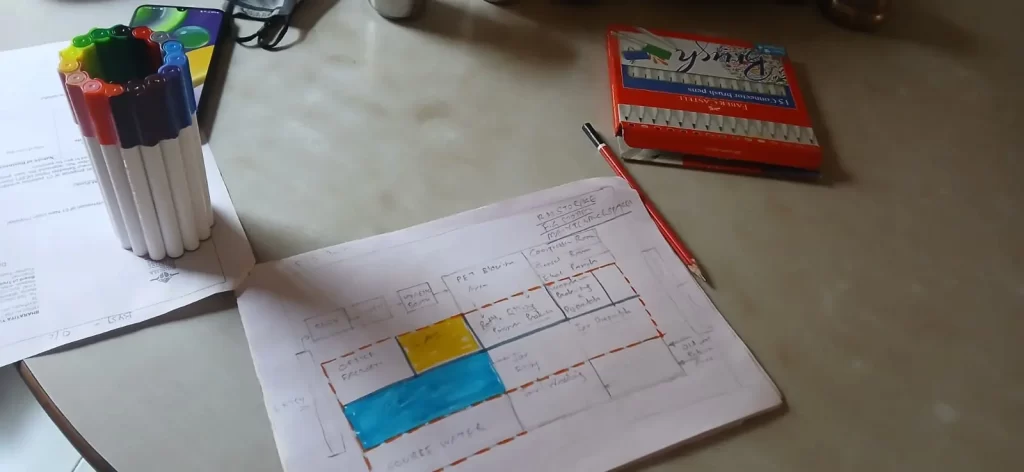
You, as an owner, may try sketching various layouts yourself
By following these four steps—determining capacity, calculating footprints, mapping one-way flow, and finalizing placement—you ensure that your plant is not just built, but engineered for success. Remember, Strategic Readiness starts on the drawing board. If you prioritize hygiene and “Man-Material” logic now, you save lakhs in future modifications and audit penalties.
Need a Professional Review? If you have a draft layout and want to ensure it meets the latest 2026 FSSAI High Risk norms, join our Orientation + Aqua Finance Metrix session. We’ll analyze your floor plan for technical accuracy and financial sustainability.
Most Common FAQs
A well-planned layout does more than just place machinery; it is a critical tool for improving overall plant efficiency. It ensures proper hygiene, meets regulatory standards, and minimizes human fatigue by optimizing the movement of staff and materials.
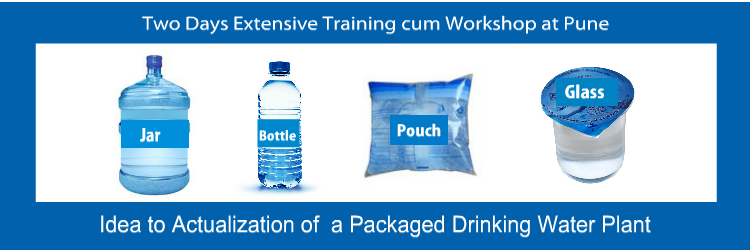
Instead of relying solely on machinery suppliers, you should use reverse engineering. Start with a market survey to identify what you will sell (e.g., 20-liter jars, 1-liter bottles, or 500ml sizes) and the expected daily volume. This production plan will dictate your actual plant capacity.
The Bureau of Indian Standards (BIS) provides specific guidelines on space allocations and hygiene maintenance. Adhering to these norms is essential for licensing and ensures that the facility design prevents contamination during the production process.
This refers to the flow of workers and raw materials throughout the plant. An effective layout reduces unnecessary to-and-fro movement, which preserves worker energy levels and maintains a streamlined production process from water treatment to packaging.
While sample layouts provide a helpful visual reference, they should not be copied exactly. Every plant has unique dimensions and specific production goals. It is better to learn the layout techniques professionally to ensure your design fits your specific business needs and site constraints.
Footnotes
- FSSAI is the Indian regulator which keeps track of the best hygeine standards met in India. They are all in accordance with CODEX Internationally. ↩︎
- “High-Risk” is a Specially Focussed FSSAI Category. ↩︎
- EBITDA is typical Financial Metric, measuring Operational Profit. It stands for Earnings Before Interest,Taxes,Depriciation& Amortisation ↩︎
- Though One Way Flow is the main logic; Plant Size decides the Lay-out. The ultimate SKU is the decider. ↩︎
- Return on Capital Employed ( Similar like ROI ) ↩︎