Categories
Uncategorized

2026 Alternatives to Plastic Water Bottles

Last Major Regulatory Update: March 12, 2026

“A pessimist sees the difficulty in every opportunity; an optimist sees the opportunity in every difficulty.”

Winston S. Churchill

Table of Contents

Sustainable Water Business 2026: Plastic Alternatives & ROI Guide.

In 2019, the industry was bracing for a “Plastic Ban.” Today, in 2026, the landscape has completely transformed. It is no longer just about avoiding a ban—it is about navigating a high-speed regulatory shift that favors the bold entrepreneur.

The Massive Shift: FSSAI Overrides BIS (January 2026)

The biggest news for 2026 is the removal of mandatory BIS certification for packaged drinking water, effective January 1st.

  • What this means for you: You no longer need to deal with dual approvals from both BIS and FSSAI.
  • The New Standard: Packaged water is now classified as a “High-Risk” food category under FSSAI. While the BIS license is gone, the Compulsory Testing Scheme is much stricter. You now need monthly microbiological reports and six-monthly chemical audits.

💡 Expert Note: Many entrepreneurs mistakenly think this makes the business “easier.” In reality, FSSAI’s “High-Risk” classification means you need a much higher level of laboratory discipline. We cover the setup of these in-house testing protocols in our Day 4 of Training Session

The Rise of EPR (Extended Producer Responsibility)

As of 2026, the Indian government has fully implemented the EPR Certificate system.

  • If you manufacture in plastic, you are now legally responsible for 100% of your plastic waste.
  • The Opportunity: By switching to the alternatives discussed below (Glass, Water ATMs, or Refillable 20L Jars), you significantly reduce your compliance costs and can even generate EPR Credits that other businesses will pay you for.

Expert Insight: “In my 28 years , I have never seen a better time for local entrepreneurs. The barrier of ‘Mandatory BIS’ has dropped, but the ‘Quality Barrier’ has risen. This is where the real money is made.” — Soumitra Ghotikar

Profitable Alternatives: 4 Business Models for 2026

Success in the water industry today requires looking beyond the PET bottle. Here are the four most viable business models I am currently helping my mentees implement.

1. Glass Bottling Plants (The “Premium” Play)

With luxury hotels, fine-dine restaurants, and corporate offices banning plastic, glass is the #1 choice for high-margin branding.

  • Target Market: B2B, HoReCa (Hotels, Restaurants, Cafes).
  • Investment: ₹25 Lakhs – ₹50 Lakhs (depending on automation).
  • The 2026 Edge: Glass bottles are infinitely recyclable and offer a “Premium Perception” that allows you to charge ₹50–₹100 per 750ml bottle, compared to just ₹20 for plastic.

2. Water ATMs & Vending Kiosks (The “High-Volume” Play)

Ideal for local entrepreneurs in Tier-1/Tier-2 cities. These units provide chilled, RO-purified water at a fraction of the cost of bottled water.

  • Target Market: Railway stations, bus stands, hospitals, and residential clusters.
  • Investment: ₹5 Lakhs – ₹10 Lakhs per unit.
  • The 2026 Edge: Integration with UPI and IoT allows you to manage multiple locations from your smartphone. It solves the “Plastic Waste” problem by encouraging consumers to bring their own bottles.

3. The “Pure Water Kiosk” (The Retail Hub)

Instead of just a plant, you build a “Water Experience Center.”

  • The Model: Sell high-quality purified water alongside high-margin lifestyle products like Steel, Copper, and Bamboo bottles.
  • Investment: ₹10 Lakhs – ₹20 Lakhs.
  • The 2026 Edge: This turns a commodity business into a lifestyle brand. You aren’t just selling water; you are selling the vessels and the trust of 30-step purification.

4. Eco-Friendly Cartons & Paper Bottles (The “Innovator” Play)

Commonly known as “Boxed Water,” this is a new but rapidly growing segment in India (Gable-top cartons).

The 2026 Edge: Highest ESG (Environmental, Social, and Governance) rating. Large corporations are actively seeking these suppliers to meet their 2026 sustainability targets.

Target Market: Airlines, high-end events, and eco-conscious Gen-Z consumers.

Investment: ₹ 2 CR + (Higher Capex due to specialized filling machinery).

The “Aqua Finance Metrix”: Choosing the Right Budget (₹15L – ₹75L)

When entrepreneurs ask me for alternatives to plastic, the first question is always: “How much will it actually cost?” In my 30 years of manufacturing and mentoring, I have seen too many people fail because they didn’t match their business model to their capital. Based on 2026 market rates in India, here is how you should allocate your budget.

The ₹15 Lakhs to ₹35 Lakhs Bracket (The “Local Hero” Model)

This is the entry-level for serious entrepreneurs.

  • Best Fit: 20L Refillable Jar Plants or a cluster of 5-7 Water ATMs.
  • Why it works: You avoid the high cost of single-use plastic waste management. The 20L jar is the “original” plastic alternative because it is reused up to 40 times.
  • Profit Tip: Focus on a 10km radius to keep delivery costs under control.

The ₹35 Lakhs to ₹55 Lakhs Bracket (The “Premium Pioneer” Model)

This allows for semi-automatic Glass Bottling lines.

  • Best Fit: A dedicated Glass Bottling plant with a capacity of 1,000 to 2,000 bottles per hour.
  • Why it works: This budget covers high-quality RO + UV + Ozone treatment systems, ensuring your water quality matches the “luxury” feel of the glass bottle.
  • Profit Tip: Target the “Horeca” (Hotel/Restaurant/Cafe) segment with customized branding on the glass.

The ₹55 Lakhs to ₹75 Lakhs+ Bracket (The “Industrial Innovator” Model)

This is for those looking to disrupt the national market.

  • Best Fit: Fully automatic Glass or Aluminum Can lines, or high-capacity Gable-top (Paper) carton plants.
  • Why it works: High-speed automation reduces labor costs and ensures 100% sterile packaging, which is critical now that FSSAI has tightened “High-Risk” food category audits.
  • Profit Tip: Use this scale to negotiate better rates for sustainable raw materials, increasing your overall ROI.

Important Note: These ranges are not just for machinery. A successful 2026 plant budget must include:

  1. Water Source Development (Hydrogeological surveys)
  2. Digital Presence (SEO-optimized website & Lead Funnels)
  3. The “Expert Edge” Training (Learning the SOPs to avoid 6-month delays)

The Expert Edge: Navigating 2026 with a 30-Year Veteran

The transition away from plastic isn’t just a change in machinery—it’s a change in Business Strategy. In 2026, the difference between a profitable plant and a failed investment is often just a few critical decisions made in the planning stage.

Don’t Build a Plant Based on 2018 Standards

Most consultants are still teaching the “Old Way” (PET bottles and BIS audits). But as we’ve seen, the removal of mandatory BIS and the rise of FSSAI High-Risk audits have changed the game.

How I help you gain the “Expert Edge”:

  • The Blueprint Phase: We design your plant layout for 2026 compliance from day one—whether it’s Glass, Water ATMs, or specialized Eco-Cartons.
  • The Aqua Finance Metrix: I provide you with the exact cost-to-profit ratios for each alternative packaging type, so you know your ROI before you spend a single Rupee.
  • Direct Mentorship: Move beyond generic “coaching.” Get the same insights I’ve used to set up over 150 projects across India and internationally.

Your Next Step to a Plastic-Free Water Business

The market for “Good Water” is only growing. While others see a “Plastic Ban” as a roadblock, my mentees see it as the entry point to a premium, high-margin brand.

Feel Good, India has taken a lead role !

To beat any challenge , one can only come up with alternatives with a positive, assertive, optimistic approach. It calls for a “Feel Good” factor. A bigger picture. Feel good, feel proud that you, how small or large though one of those 6000 + business owners, are still contributing to the mother earth. And be thankful, that you are in a country which is taking a lead role in the Earth’s issues !

Why this can be a great opportunity …

Having made a concrete decision to come out with environment freindly options to Plastic Water Bottles, now let’s talk about alternatives. Here, we shall talk about alternate, and innovative Bottled Water Business Models, which might come out of this challenge. Because your business is Water, not the plastic bottle, in principle.

You can become a trend setter-pioneer !

When BISLERI arrived into the Indian market, Bottled water was a great, luxury,premium thing. But now ? It’s such a prominent brand that even pure water is called as “bisleri water“. The situation is similar today, rather, little better. People need not be convinced about the Pure Water importance. And still you can come out with something new to set a trend.

Local Entrepreneurs .. great time for you !

Currently, this business is a Distributor dominated business. The producer sells bottles to the distributor (Rs.6-8 per bottle), distributor to his sub-sub distributors & ultimately you and me pay Rs. 20/- per bottle. So, there is a huge cost we pay for distribution. It’s more than Double.

Again, it’s interesting to know how much is the cost of water inside the bottle. The producer (with his profit) sells the bottle at Rs. 7 (average). The average per bottle cost is Rs. 3.7 to 4.10. In this, water cost is not even 25 paise per litre.

Effectively the consumer ends up Rs.20 per litre, which costs Rs.0.25 (25 paise)

As the industry evolves toward sustainable packaging, this business is set to open to creative entrepreneurs, who come out with solutions by which they can offer GOOD WATER, to people. This is the time to get out of the clutches of the established pattern of business, and demands Business Model Innovation.

Understand that your business is WATER,not just BOTTLED Water. Hence the market is still present. You just need to take a turn & think little differently.

Attend Training to get ideas

Attend our Live Training where we shall be sharing & talking about this in details. You may get some excellent clues on how you can encash this newly arrived opportunity.

FAQs

Is BIS certification still mandatory for a new water plant in 2026?

As of January 1, 2026, the FSSAI has officially removed the mandatory requirement for a BIS license. However, the industry is now classified as a “High-Risk” category. You must now comply with the FSSAI Compulsory Testing Scheme (SIT), which involves monthly microbiological testing and quarterly chemical audits to maintain your license. In our Training we specially talk on this.

How much does it cost to set up a glass water bottling plant in India?

A semi-automatic glass bottling line typically starts around ₹25 Lakhs, while fully automated industrial lines for premium branding can range from ₹50 Lakhs to ₹75 Lakhs. This budget includes specialized rinsing and capping machinery designed for glass durability, which differs significantly from standard PET equipment.

Can I start a water business with a budget under ₹15 Lakhs?

Yes. While a full bottling plant usually starts at ₹15 Lakhs, a Water ATM network or a Small-Scale 20L Jar Filling unit is a highly profitable entry point. Basic Water ATM models start as low as ₹1.5 Lakhs to ₹5 Lakhs per unit and are perfect for high-traffic local areas like Pune or Tier-2 cities.

You can also think of Co-Packing to begin with.

What are the best alternatives to plastic for a regional water brand?

For 2026, the most viable models are Premium Glass Bottles (best for Horeca), Aluminum Cans (best for events), and UPI-integrated Water ATMs (best for mass public consumption). Each has a different ROI structure, which we analyze in our Aqua Finance Metrix.

What is the biggest challenge when moving away from PET bottles?

The main challenge is Logistics and Sterilization. Glass and refillable jars require a robust cleaning and return-cycle system. Unlike one-way plastic, these models demand higher operational discipline to ensure 100% hygiene and a sustainable “Circular Economy” profit model.

Categories
Mineral Water

What is Packaged Natural Mineral Water Actually ?

Every Bottle of Water is NOT Mineral Water

Premium Bottled Water sold in India

We generally call it “Mineral Water” , however, it is not usually “Mineral Water”. In every training, we ask the participants about what is their understanding of “Mineral Water”, though generally we call it that way. To cut a probable long story short, please understand that there is a central institution in India, called the B.I.S. which is the decision making power for all citizens of India, about which water you can drink (safely). I mean the real water, which quenches your thirst when you really feel thirsty. Till date , the “Flavoured Water” or “Alkaline Water” and many such categories are still not approved by the B.I.S. Let’s not talk about them, and see what the BIS has approved.

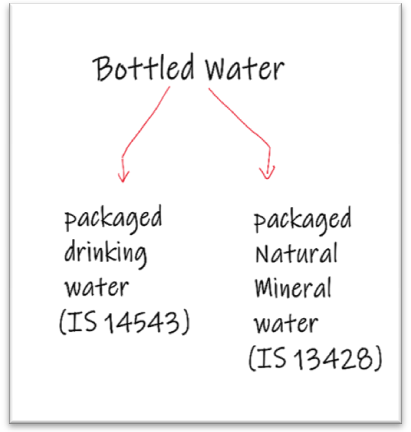
There are just 2 categories

Yes, there are only 2 categories as of date :-

  • Packaged Drinking Water (Standard IS 14543)
  • Packaged Natural Mineral Water (Standard IS 13428)

What is the difference in these ?

(Listen to the audio Discussion took place during one of our training sessions about this subject)

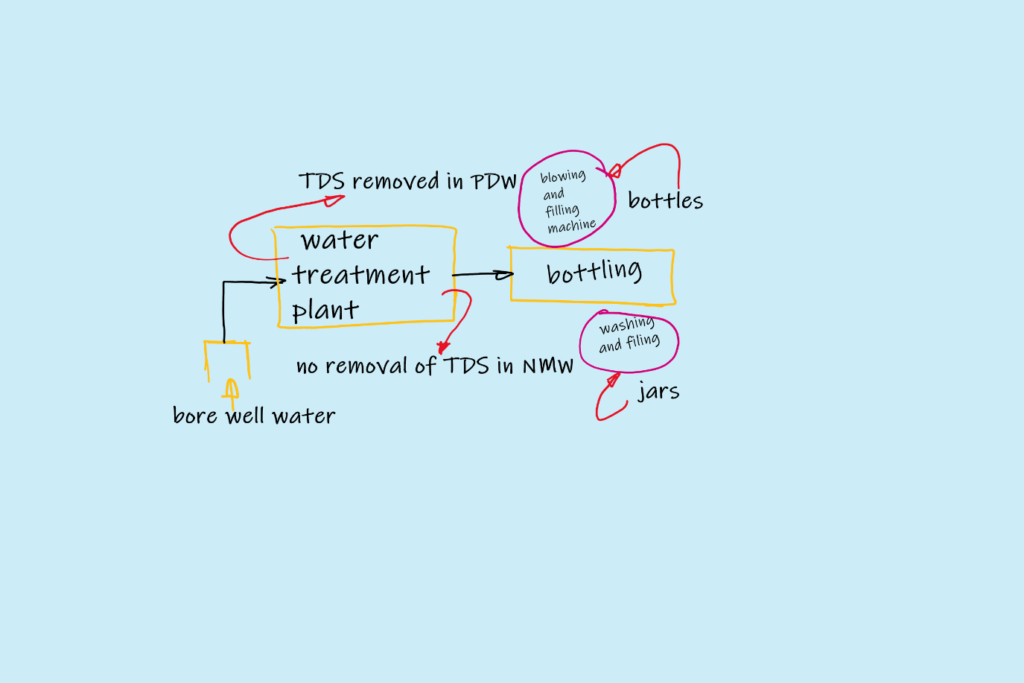
Taking it very simply, the Natural Mineral Water is the one which when used for drinking has all the hygienically good minerals & compositions in-built. The natural mineral water becomes “Packaged Natural Mineral Water” when it is Bottled or packed. Whereas the other one – the packaged drinking water is a modified water by physically removing the whole dissolved particals (#TDS) first (by #RO method ) and then making it suitable by adding the required dosages of useful compositions back.

#RO Method : Using Reverse Osmosis Filtration method, through which the finest of the impurities which are present in form of Totally Dissolved Solids (TDS). This TDS is measured in PPM Particals per Million or mg/l Miligrams per ltr. Hence when we say the water TDS is 200; it means 200 particals of solids in 1 million (10 lakh) particals

How to know about this more ?

Mineral Water Project Information conducts training for people venturing into water business. Visit Youtube Chanel or Download Our App from Playstore

In Natural Mineral Water, Compositions are retained

The Natural Mineral Water Unlike the Packaged Drinking Water, retains the original composition intact. The #TDS mentioned above is not removed from that. Hence no RO Method is involved. Just have a look at the TDS mentioned on the some of the Packaged Natural Mineral Water :-

  • Kelzai Volcanic Water …. 198- 248
  • VEEN …….. 289
  • Natural Springs (for Vistara) ……216 to 252
  • Qua ….. 200-250

#TDS means the Total Dissolved Solids in the water.

# TDS of Packaged Drinking Water like Bisleri is usually below 100

What does the BIS say about this ?

While considering Natural Mineral Water, the BIS says that it should be in the range of 150-700 TDS. In other words, in no condition it should be lesser than 150 PPM.

Natural Mineral Water TDS Range
TDS Range in Natural Mineral water

What is the range for Packaged Drinking Water as per the BIS ?

BIS has mentioned the range like “Maximum” 500, however, no Minimum has been mentioned.

TDS Range for Packaged Drinking Water

Why there is a difference ?

The Packaged Drinking Water is actually a newly made , modified water from its original drawn (Raw Water), it can have the exact composition. However, in the Natural Mineral Water, we are not removing the Dissolved particals, in a belief that they are in exact proportion as per described, no matter the TDS is more. Rather, it is observed in these waters that these properties play their part at a minimum TDS level, which is 150 minimum.

What are some other Parameters ?

Calcium & Magnesium

Every Brand had mentioned this on its label about the quantities present :-

Calcium :-

  • Kelzai : 32-36 mg
  • Blue Pine : 3.6
  • Veen : 48.38 mg
  • Natural Springs : 31-51 mg
  • Qua : Less than 60 mg

Magnesium :-

  • Kelzai : 3.16 mg
  • Blue Pine : 1.4
  • Veen : 24 mg
  • Natural Springs : 4.61-7.8 mg
  • Qua : Less than 15 mg

Permissible Range by the BIS :

For Calcium upto 100 mg/ltr , for Magnesium it’s 50 mg/ltr

Calcium & Magnesium Level in Natural Mineral Water

From the above data, we can easily notice that “Veen” has more percentage of Calcium & Magnesium in it. It is in permissible range. As per a post on Medical News Today Calcium as we all know is vital for Bone Health, if present more, also needs Magnesium to absorb that. The presence of both of these Minerals are extremely beneficial to our body. The Veen Website clearly claims the advantages , that they are naturally present in the water.

Veen Still Website
Veen Still Website

But why these Mineral Waters are so expensive ?

Look at the Price it’s sold at ..

BrandQtyPackaged InPrice Rs
Veen330 mlGlass Bottle200/-
Qua500 mlPET Bottle65/-
Kelzai500 mlPET Bottle65/-
Kelzai750 mlGlass Bottle375/-

Water, if not packed, and used as it is, without any treatment except the minor ones like physical filtration, will not be expensive at all. Hence if you consume these all waters at its source (e.g. Himalayas), it would be almost free. However, when it is commercially bottled, it will attract all the norms to be standardised as per the B.I.S. standards, which more or less implements the Codex practices. Codex is collection of all food related standards created across the world.

But what makes them so expensive ?

Reason no.1 : It is not available everywhere

Right or wrong, scarcity of anything makes the thing more valuable. As the Water from Himalayas is not available anywhere in India, it makes that unique. Of course, when Branded in a proper way.

Reason no.2 : The Distribution Cost

Unlike the Packaged Drinking Water, which can be produced anywhere, the Natural Mineral Water is produced at just the very location; hence taking the bottled water to all places is a cost.

Reason no.3 : Protection of Source

In Natural Mineral Water; the SOURCE from where it is obtained becomes the single most valuable component. And the protection of the same, to save the same from any manual intervention becomes a very huge task, resulting into incurring costs at various locations from the point of source till the point of availability.

Reason no.4 : Quality Control Cost

As the source for this water is natural, the impurities besides the Total Dissolved Minerals can be a parameter to be monitored on a continuous basis. This needs sampling, re sampling, Q.C. at labs, a more regular & engaged task, compared to that of the Packaged Drinking Water. This adds up to the cost to a great extent.

Reason no.5 : Branding & Marketing Cost

The market for this water is surely not the one like for Packaged Drinking Water. It’s little different, an “Up”market if you wish to call it. Obviously the strategies also differ. The placement, marketing, influencers also vary from Market to Market. While camels are ok for a Bisleri Campaign; a film star Radhika Apte does the Smart Water Campaigns, and a Water sommelier like Ganesh Iyer is marketing Veen. This is surely a cost.

Summary

Market for Natural Mineral Water is Different

Yes, it is different, however, it’s emerging. If you stay in hilly areas, like the western ghats in India, it’s quite unexplored.

You need to apply a different approach

To make money with the Natural Mineral Water, you will need to apply a totally different approach, as the rewards will be huge.

Categories
Uncategorized

Case Study Tata Water Plus

Tata Water Plus

While moving in Chennai, at Murugan Idli near Egmore, I asked for “Bisleri” water; which has become a slang for Pure Water in India. Asking for Bisleri is telling the guy like “Please give me pure, good,safe hygienic bottled water“. Obviously, whichever brand he serves is acceptable. However, a little better informed person like me goes further & checks something minimum like the ISI mark on the same (Its compulsory). If I don’t observe that, then at least the fssai mark.

So, the guy served me a bottle, which very much looked like a regular packaged drinking water bottle, costed Rs.20 as all the others, and was marked “TATA WATER PLUS”. The brand “Tata” made me very curious as it has a proud feeling in almost all Indians. And this was not Packaged Drinking Water, it was called as “Nutrient Water

Tata Water Plus Water Bottle
A 1 Ltr Bottle of Tata Water Plus

I studied the labels in detail and found out, that it is “Nutrient” Water; which is a JV by the Tatas & Nourishco Beverages, which has several plants where it is manufactured. We did search one of the license numbers, and found the following results :-

Place of Manufacture

This place has also been declared as “Packaged Drinking Water”, so I used the BIS website to do a search

You may check “Yuthish Industries” , status as “Operative

The Licenses from the manufacturer are also active. Both : the BIS as well as the fssai, plus the brand/business owner : Nourishco. Hence all is well.

The why this water is not “Packaged Drinking Water ?”

The manufacturer’s premises is used, which is under the BIS, however, the brand which is packed “Tata Water Plus” is not BIS compliant, hence it is not Packaged Drinking Water. Rather, it’s a choice of the brand owners to be different & to offer Nutrient water, which is a proprietary food.

Categories
Mineral Water Business Mineral Water Plant Cost

Low Cost Mineral Water Plant Business

Low Cost Mineral Water Plant

Whenever someone is thinking of going for a Low Cost Mineral Water Plant, there can be 2 -3 ways :

  1. Starting a low budget mineral water plant , with ISI
  2. Starting an RO Plant with Chiller , without ISI
  3. Starting a Mineral Water Business, with someone else’s production unit

Starting a Low Budget ISI Water Plant

Starting an ISI Water Plant requires you to be aware of Mineral Water Plant License Cost. It means installing all machinery confining to the B.I.S. Standards as per IS-14543, which is the standard set for Packaged Drinking Water (Technical Name for otherwise called “Mineral Water”). The cost of such a plant will include the cost of lab, Filling Machine, Plastic PET Blow Machine and plant construction as per ISI.

Going for Low Budget is actually going for a small scale mineral water plant. You will need to cut down the Mineral Water Plant Machinery Cost. For Example, instead of going for a 60 BPM machine you can go for a 24 BPM machine, or you can totally avoid the Bottles Manufacturing. In such a case, you can go for a small Jars Plant or Pouches Plant (if permissible in your state). If you are going for all 3 varieties like Bottles, Jars & Pouch; and still want to have a low cost mineral water plant, then you may need to get the bottles manufactured by some other source. This can cut the investment size-ably. Check the plastic pet bottle blowing machine price to know this. You can refer to the BIS website for the BIS rules & can also refer to the Cost Article to get more ideas on an ISI RO Plant Project Cost.

Can RO Plant with Chiller be the Option ?

Chilled Water Non ISI Jars

People often confuse these type jars with the BIS approved 20 Ltr Transparent Jars, also called as “Bubble Tops”. There will be huge difference between a 20 Ltr Jar Mineral Water Plant Price (ISI) & an RO Plant with Chiller Price in India. As the former confine to ISI standards and the latter doesn’t. RO Plant with Chiller is NOT covered under the BIS premise, hence you always run a risk of your unit getting sealed, though clear policy is still to arrive.

Starting a Mineral Water Business with Someone else’s Production Unit

This means you will just own the brand, do marketing & someone else with a valid BIS license & production facilities will produce the bottles or Jars for you. This will save you from Mineral Water Plant Machinery Cost, Mineral Water Plant License Cost and you can be perfectly achieving your goal :- Having a low cost mineral water plant project.

This is also referred as “Co-Packing” Business. A new term emerging. It can be started with a very low investment compared to a manufacturing unit. You can refer to the special Playlist we have created on our Youtube Channel. We also offer consultancy for this called as “Tri-Party Consultation“.

We also throw light on this during our Online Training Sessions.

Having own , even a small water bottling plant is always an edge over getting it done from outside. But this can be a viable solution for those who wish to start with a very small budget. Look at the following success story :-

A small Budget can also make your fortune !

Categories
Plant Layout

Packaged Drinking Water Plant Layout: A Technical 4-Step Design Guide

Updated March 2026

As of January 2026, the regulatory landscape for bottled water has shifted. With the removal of mandatory BIS certification, Packaged Drinking Water is now classified under the FSSAI High Risk Food Category. Though there is not much change in the layout; however, equipment hygiene will be top priority in the High-Risk Category audits of the Fssai. We shall walk you through the Layout Design process.

Professional engineers measuring the floor plan for an FSSAI High Risk packaged drinking water plant layout.
(Request Not to Copy & Use as it is)

A Packaged Drinking Water Plant Layout design is a critical milestone in your project setup. In 2026, it serves as more than just a floor plan; it is a strategic tool to improve overall plant efficiency and ensure compliance with the FSSAI High Risk category standards.

Did I Forget to Mention This ?

Do not demarcate your Factory Plot Size yet

Before creating a proper lay-out, it’s not advisable to build your shed & mark boundaries of your allocated Plot. This will ultimately also decide how much land you require for the plant ( dedicated post )

With the transition from mandatory BIS to FSSAI-led audits, your layout must now strictly adhere to Schedule IV hygiene norms. A well-planned design prevents cross-contamination, optimizes man-material movement, and ensures your facility is audit-ready for mandatory pre-license inspections.

Below, we break down the design process into 4 Technical Steps to help you achieve a balance between operational flow and regulatory excellence.

Steps to Arrive at your Plant Layout

Step 1: Determining Plant Capacity & Audit-Ready Flow

Before a single brick is laid or a machine is ordered, you must define the “Operational Core” of your project. In the current FSSAI High Risk environment, your capacity dictates your mandatory testing frequency and your floor space requirements.

Key Considerations for 2026:

  • The 3-Zone Separation: Unlike older designs, 2026 standards require a strict physical separation between the Raw Water/Pre-treatment Zone, the High-Hygiene Filling Zone, and the Packaging/Dispatch Zone. Your layout must clearly demonstrate this “one-way flow” to pass a pre-license inspection.
  • Reverse Engineering for Efficiency: Start with your target output (e.g., 2000 LPH). Calculate the total “Footprint” of the machines plus a mandatory 2.5 to 3 feet of free space around each unit for maintenance and “Sanitary Access.”
  • Expansion Scalability: A layout that is too tight is a financial liability. We recommend designing for 20% more space than your current machinery requires to allow for future upgrades without breaking FSSAI structural norms.

The “Strategic Readiness” Checklist:

  1. Water Source to Product Flow: Does the water move in a straight or U-shaped line without crossing back over itself?
  2. Floor Slope and Drainage: Does your layout account for specialized industrial drains in the “Wet Zones”?
  3. Human-Material Conflict: Are your staff entry points separate from your raw material (bottles/caps) entry points?

Step 2: Machinery Dimensions & The “Human Fatigue Factor”

Once your capacity is fixed, the layout must be reverse-engineered based on the actual physical footprint of your equipment. A common mistake is measuring only the machine itself; you must account for the “Operational Envelope”—the space required for a human to interact with that machine safely.

During our 10-day training program, we walk you through a live calculation to arrive at your exact machinery specs. This ensures your layout isn’t just a drawing, but a technically sound blueprint for your specific production goals.

Key Engineering Considerations:

  • The Maintenance “Service Zone”: Every machine (especially the water treatment and the Filling section ) requires a minimum of 2.5 to 3 feet of clear space on all sides. This ensures that your maintenance team can reach the motors and filters without moving other equipment—a key requirement for Strategic Readiness.
  • Human-Machine Interface (HMI) Access: Position your control panels so they are easily accessible without the operator having to cross over conveyor lines. In a high-speed environment, every extra step an operator takes contributes to “Human Fatigue,” which directly impacts your ROCE through downtime and errors.
  • Vertical Space & Piping: Don’t just think in 2D. Your layout must account for overhead piping and electrical trunking. In the FSSAI High Risk category, open overhead wiring is a major non-compliance. Your layout should plan for “Clean-in-Place” (CIP) pipe routing that doesn’t obstruct movement.

“I often see entrepreneurs try to fit a 2000 LPH plant into a 1000 sq. ft. room. While it fits on paper, the ‘Fatigue Factor’ kills the business within six months. A cramped plant is a high-cost plant. Give your machines—and your people—room to breathe.”

Step 3: Designing Man-Material Movement (The Hygiene Logic)

A professional layout must act as a one-way street. The primary goal of this step is to ensure that “Man” (operators) and “Material” (raw inputs and finished goods) move through the plant without ever creating a risk of cross-contamination. This is a core requirement for Schedule IV compliance.

Key Considerations for High-Risk Audits:

  • The “One-Way” Flow: Raw water enters at one end, and finished, palletized cases exit at the other. There should be no “back-tracking.” In our consultancy, we call this the Linear Efficiency Model—it reduces both contamination risks and power consumption.
  • Segregated Entry Points: Your operators should enter through a dedicated “Change Room” with hand-sanitization stations. Raw materials (like preforms,caps, labels) should have a separate entry hatch. This physical separation is what auditors look for in the High Risk category.
  • Waste Management Zones: Your layout must include a dedicated, isolated area for “Rejects” and “Scrap.” Placing your scrap bin near the filling line is a major non-compliance in 2026. This has to be necessarily out of the packaging area.
  • The Human Fatigue Factor (Movement): Minimize the distance an operator has to walk to perform a routine check. Every meter of unnecessary movement is “Lost Time” that eats into your ROCE.

The Strategic Readiness Tip:

“A layout that looks good on paper but forces an operator to walk through a ‘wet zone’ to reach a ‘dry zone’ is a failure. We design for Microbial Safety first, and speed second. This is how you pass an FSSAI pre-license inspection on the first attempt.”

Step 4: Final Machinery Placement & FSSAI High-Risk Compliance

In this final stage, we translate the “Logic” of Steps 1-3 into a precise, dimensioned floor plan. This isn’t just a drawing for your contractor; it is a legal document required for your FSSAI High-Risk license application and the mandatory pre-license inspection.

The Final Compliance Checklist:

  • The “Sanitary Wall” Separation: Your layout must show a physical partition (glass or aluminum) between the Bottling Hall (filling) and the Water Treatment Plant. In 2026, keeping them in the same open hall is a major non-compliance for the High-Risk category.
  • Drainage Slope & Coving: Your drawing should specify that all floor-to-wall joints are Coved (rounded). This prevents bacterial growth in corners—a detail often missed by general architects but caught by FSSAI auditors.
  • Utility Routing (Air & Power): Ensure that your air compressor and electrical panels are placed in “Dry Zones” away from the filling line. Steam and water lines should be routed to minimize “condensate drip” over open bottles.
  • Audit-Readiness (The Buffer Zone): Always leave a “Buffer Zone” at the end of the line for final inspection and Shrink Wrapping. A cramped dispatch area leads to pallet damage and logistics bottlenecks, directly impacting your financial sustainability.

“We always tell our mentees: Do not start civil work until your layout is frozen. Changing a partition wall or a drain pipe after it’s built is ten times more expensive than changing a line on a drawing. Strategic readiness means getting it right on paper first.”

How to Upload Your Completed Layout to the FSSAI FoSCoS Portal

Once your technical 4-step layout is finalized, the next hurdle is the FSSAI FoSCoS application. While the portal provides a generic sample document, it often lacks the technical detail required for a High Risk water plant inspection.

In the video walkthrough below, I demonstrate the exact process of uploading your layout to FoSCoS, highlighting where to include your machinery specs and flow diagrams to ensure your application is audit-ready.

How to Get Exact Machinery Dimensions for Your FSSAI Layout

A common mistake is waiting until the plant is built to measure your machines. For a successful FSSAI FoSCoS application, you need these dimensions before you finalize your blueprint.

When you receive a quote from your machinery suppliers, do not just look at the price. Request a Technical Specification Sheet that includes the exact length, width, and height of each unit and also the Connected Power Load in HP/KW (Water Treatment, Filling, Secondary Packaging, Bottle Blowing Sections).

Why this data is mandatory for 2026 Compliance:

  • Audit-Ready Blueprints: FSSAI FSO’s ( Food Safety Officers ) now look for “Operation-wise area allocation.” If your machinery list says a machine is 2 meters long, but your layout only shows 1 meter of space, your license could be delayed.
  • The “Man-Material” Logic: Having exact dimensions allows you to prove there is enough “walking space” to prevent cross-contamination—a key requirement for the High Risk category.
  • FoSCoS ‘Machinery List’ Requirement: On the portal, you must upload a specific list that includes the Number of Units, Installed Capacity, and Horsepower(HP) (and KW possibly) used.

Check through this Video, how to upload the List of Machines on FSSAI portal

The Strategic Advantage of Direct Machinery Procurement

Many new entrepreneurs fall into the “Single-Source” trap, where they buy an entire plant from a single turnkey contractor. While this seems convenient, it often results in higher costs and lower control over the quality of individual components.

In 2026, the most successful water plants are built using a Direct Procurement Model. Instead of a bundled package, you can source specialized machines individually from high-quality manufacturers—often through direct internet research and supplier audits.

Why “Buying Direct” Wins in 2026:

  • Major Cost Savings: You eliminate the 15%–30% markup typically added by middleman contractors.
  • Superior Quality Control: You can choose a high-end filling machine from one specialist and a heavy-duty RO system from another, ensuring every part of your plant is “Best-in-Class.”
  • Direct Warranty & Service: You hold the original manufacturer’s service agreement, ensuring faster repairs and cheaper spare parts in the long run.

How to Synchronize Individual Machines

The challenge of buying individually is ensuring that every machine fits your FSSAI High Risk layout and works in perfect harmony. This is where technical synchronization is required to avoid capacity bottlenecks.

Get Expert Help with Your Selection: If you are sourcing machines individually, we provide a specialized Consultancy. Check our Consultancy Page. We help you verify technical specs, audit supplier credibility, and ensure your entire plant meets 2026 regulatory standards while saving you lakhs in procurement costs.

Conclusion: Designing for the Future of Bottled Water

A Packaged Drinking Water Plant Layout is no longer a static drawing; it is a dynamic operational strategy. With the 2026 shift to the FSSAI High Risk category, your layout is your first line of defense against regulatory non-compliance and operational inefficiency.

By following these four steps—determining capacity, calculating footprints, mapping one-way flow, and finalizing placement—you ensure that your plant is not just built, but engineered for success. Remember, Strategic Readiness starts on the drawing board. If you prioritize hygiene and “Man-Material” logic now, you save lakhs in future modifications and audit penalties.

Need a Professional Review? If you have a draft layout and want to ensure it meets the latest 2026 FSSAI High Risk norms, join our Orientation + Aqua Finance Metrix session. We’ll analyze your floor plan for technical accuracy and financial sustainability.

Most Common FAQs

1. Why is the plant layout important for a mineral water business?

A well-planned layout does more than just place machinery; it is a critical tool for improving overall plant efficiency. It ensures proper hygiene, meets regulatory standards, and minimizes human fatigue by optimizing the movement of staff and materials.

2. How do I determine the right plant capacity for my layout?

Instead of relying solely on machinery suppliers, you should use reverse engineering. Start with a market survey to identify what you will sell (e.g., 20-liter jars, 1-liter bottles, or 500ml sizes) and the expected daily volume. This production plan will dictate your actual plant capacity.

3. What role do BIS norms play in designing the layout?

The Bureau of Indian Standards (BIS) provides specific guidelines on space allocations and hygiene maintenance. Adhering to these norms is essential for licensing and ensures that the facility design prevents contamination during the production process.

4. What is “Man-Material Movement” in plant design?

This refers to the flow of workers and raw materials throughout the plant. An effective layout reduces unnecessary to-and-fro movement, which preserves worker energy levels and maintains a streamlined production process from water treatment to packaging.

5. Can I use a sample plant layout for my own facility?

While sample layouts provide a helpful visual reference, they should not be copied exactly. Every plant has unique dimensions and specific production goals. It is better to learn the layout techniques professionally to ensure your design fits your specific business needs and site constraints.