Last Major Regulatory Update: March 12, 2026
“A pessimist sees the difficulty in every opportunity; an optimist sees the opportunity in every difficulty.”
Winston S. Churchill
Table of Contents
Sustainable Water Business 2026: Plastic Alternatives & ROI Guide.
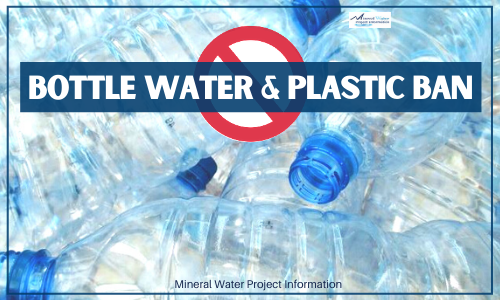
In 2019, the industry was bracing for a “Plastic Ban.” Today, in 2026, the landscape has completely transformed. It is no longer just about avoiding a ban—it is about navigating a high-speed regulatory shift that favors the bold entrepreneur.
The Massive Shift: FSSAI Overrides BIS (January 2026)
The biggest news for 2026 is the removal of mandatory BIS certification for packaged drinking water, effective January 1st.
- What this means for you: You no longer need to deal with dual approvals from both BIS and FSSAI.
- The New Standard: Packaged water is now classified as a “High-Risk” food category under FSSAI. While the BIS license is gone, the Compulsory Testing Scheme is much stricter. You now need monthly microbiological reports and six-monthly chemical audits.
💡 Expert Note: Many entrepreneurs mistakenly think this makes the business “easier.” In reality, FSSAI’s “High-Risk” classification means you need a much higher level of laboratory discipline. We cover the setup of these in-house testing protocols in our Day 4 of Training Session
The Rise of EPR (Extended Producer Responsibility)
As of 2026, the Indian government has fully implemented the EPR Certificate system.
- If you manufacture in plastic, you are now legally responsible for 100% of your plastic waste.
- The Opportunity: By switching to the alternatives discussed below (Glass, Water ATMs, or Refillable 20L Jars), you significantly reduce your compliance costs and can even generate EPR Credits that other businesses will pay you for.
Expert Insight: “In my 28 years , I have never seen a better time for local entrepreneurs. The barrier of ‘Mandatory BIS’ has dropped, but the ‘Quality Barrier’ has risen. This is where the real money is made.” — Soumitra Ghotikar
Profitable Alternatives: 4 Business Models for 2026
Success in the water industry today requires looking beyond the PET bottle. Here are the four most viable business models I am currently helping my mentees implement.
1. Glass Bottling Plants (The “Premium” Play)
With luxury hotels, fine-dine restaurants, and corporate offices banning plastic, glass is the #1 choice for high-margin branding.
- Target Market: B2B, HoReCa (Hotels, Restaurants, Cafes).
- Investment: ₹25 Lakhs – ₹50 Lakhs (depending on automation).
- The 2026 Edge: Glass bottles are infinitely recyclable and offer a “Premium Perception” that allows you to charge ₹50–₹100 per 750ml bottle, compared to just ₹20 for plastic.
2. Water ATMs & Vending Kiosks (The “High-Volume” Play)
Ideal for local entrepreneurs in Tier-1/Tier-2 cities. These units provide chilled, RO-purified water at a fraction of the cost of bottled water.
- Target Market: Railway stations, bus stands, hospitals, and residential clusters.
- Investment: ₹5 Lakhs – ₹10 Lakhs per unit.
- The 2026 Edge: Integration with UPI and IoT allows you to manage multiple locations from your smartphone. It solves the “Plastic Waste” problem by encouraging consumers to bring their own bottles.
3. The “Pure Water Kiosk” (The Retail Hub)
Instead of just a plant, you build a “Water Experience Center.”
- The Model: Sell high-quality purified water alongside high-margin lifestyle products like Steel, Copper, and Bamboo bottles.
- Investment: ₹10 Lakhs – ₹20 Lakhs.
- The 2026 Edge: This turns a commodity business into a lifestyle brand. You aren’t just selling water; you are selling the vessels and the trust of 30-step purification.
4. Eco-Friendly Cartons & Paper Bottles (The “Innovator” Play)
Commonly known as “Boxed Water,” this is a new but rapidly growing segment in India (Gable-top cartons).
The 2026 Edge: Highest ESG (Environmental, Social, and Governance) rating. Large corporations are actively seeking these suppliers to meet their 2026 sustainability targets.
Target Market: Airlines, high-end events, and eco-conscious Gen-Z consumers.
Investment: ₹ 2 CR + (Higher Capex due to specialized filling machinery).
The “Aqua Finance Metrix”: Choosing the Right Budget (₹15L – ₹75L)
When entrepreneurs ask me for alternatives to plastic, the first question is always: “How much will it actually cost?” In my 30 years of manufacturing and mentoring, I have seen too many people fail because they didn’t match their business model to their capital. Based on 2026 market rates in India, here is how you should allocate your budget.
The ₹15 Lakhs to ₹35 Lakhs Bracket (The “Local Hero” Model)
This is the entry-level for serious entrepreneurs.
- Best Fit: 20L Refillable Jar Plants or a cluster of 5-7 Water ATMs.
- Why it works: You avoid the high cost of single-use plastic waste management. The 20L jar is the “original” plastic alternative because it is reused up to 40 times.
- Profit Tip: Focus on a 10km radius to keep delivery costs under control.
The ₹35 Lakhs to ₹55 Lakhs Bracket (The “Premium Pioneer” Model)
This allows for semi-automatic Glass Bottling lines.
- Best Fit: A dedicated Glass Bottling plant with a capacity of 1,000 to 2,000 bottles per hour.
- Why it works: This budget covers high-quality RO + UV + Ozone treatment systems, ensuring your water quality matches the “luxury” feel of the glass bottle.
- Profit Tip: Target the “Horeca” (Hotel/Restaurant/Cafe) segment with customized branding on the glass.
The ₹55 Lakhs to ₹75 Lakhs+ Bracket (The “Industrial Innovator” Model)
This is for those looking to disrupt the national market.
- Best Fit: Fully automatic Glass or Aluminum Can lines, or high-capacity Gable-top (Paper) carton plants.
- Why it works: High-speed automation reduces labor costs and ensures 100% sterile packaging, which is critical now that FSSAI has tightened “High-Risk” food category audits.
- Profit Tip: Use this scale to negotiate better rates for sustainable raw materials, increasing your overall ROI.
Important Note: These ranges are not just for machinery. A successful 2026 plant budget must include:
- Water Source Development (Hydrogeological surveys)
- Digital Presence (SEO-optimized website & Lead Funnels)
- The “Expert Edge” Training (Learning the SOPs to avoid 6-month delays)
The Expert Edge: Navigating 2026 with a 30-Year Veteran
The transition away from plastic isn’t just a change in machinery—it’s a change in Business Strategy. In 2026, the difference between a profitable plant and a failed investment is often just a few critical decisions made in the planning stage.
Don’t Build a Plant Based on 2018 Standards
Most consultants are still teaching the “Old Way” (PET bottles and BIS audits). But as we’ve seen, the removal of mandatory BIS and the rise of FSSAI High-Risk audits have changed the game.
How I help you gain the “Expert Edge”:
- The Blueprint Phase: We design your plant layout for 2026 compliance from day one—whether it’s Glass, Water ATMs, or specialized Eco-Cartons.
- The Aqua Finance Metrix: I provide you with the exact cost-to-profit ratios for each alternative packaging type, so you know your ROI before you spend a single Rupee.
- Direct Mentorship: Move beyond generic “coaching.” Get the same insights I’ve used to set up over 150 projects across India and internationally.
Your Next Step to a Plastic-Free Water Business
The market for “Good Water” is only growing. While others see a “Plastic Ban” as a roadblock, my mentees see it as the entry point to a premium, high-margin brand.
Feel Good, India has taken a lead role !
To beat any challenge , one can only come up with alternatives with a positive, assertive, optimistic approach. It calls for a “Feel Good” factor. A bigger picture. Feel good, feel proud that you, how small or large though one of those 6000 + business owners, are still contributing to the mother earth. And be thankful, that you are in a country which is taking a lead role in the Earth’s issues !
Why this can be a great opportunity …
Having made a concrete decision to come out with environment freindly options to Plastic Water Bottles, now let’s talk about alternatives. Here, we shall talk about alternate, and innovative Bottled Water Business Models, which might come out of this challenge. Because your business is Water, not the plastic bottle, in principle.
You can become a trend setter-pioneer !
When BISLERI arrived into the Indian market, Bottled water was a great, luxury,premium thing. But now ? It’s such a prominent brand that even pure water is called as “bisleri water“. The situation is similar today, rather, little better. People need not be convinced about the Pure Water importance. And still you can come out with something new to set a trend.
Local Entrepreneurs .. great time for you !
Currently, this business is a Distributor dominated business. The producer sells bottles to the distributor (Rs.6-8 per bottle), distributor to his sub-sub distributors & ultimately you and me pay Rs. 20/- per bottle. So, there is a huge cost we pay for distribution. It’s more than Double.
Again, it’s interesting to know how much is the cost of water inside the bottle. The producer (with his profit) sells the bottle at Rs. 7 (average). The average per bottle cost is Rs. 3.7 to 4.10. In this, water cost is not even 25 paise per litre.
Effectively the consumer ends up Rs.20 per litre, which costs Rs.0.25 (25 paise)
As the industry evolves toward sustainable packaging, this business is set to open to creative entrepreneurs, who come out with solutions by which they can offer GOOD WATER, to people. This is the time to get out of the clutches of the established pattern of business, and demands Business Model Innovation.
Understand that your business is WATER,not just BOTTLED Water. Hence the market is still present. You just need to take a turn & think little differently.
Attend Training to get ideas
Attend our Live Training where we shall be sharing & talking about this in details. You may get some excellent clues on how you can encash this newly arrived opportunity.
FAQs
Is BIS certification still mandatory for a new water plant in 2026? As of January 1, 2026, the FSSAI has officially removed the mandatory requirement for a BIS license. However, the industry is now classified as a “High-Risk” category. You must now comply with the FSSAI Compulsory Testing Scheme (SIT), which involves monthly microbiological testing and quarterly chemical audits to maintain your license. In our Training we specially talk on this.
How much does it cost to set up a glass water bottling plant in India? A semi-automatic glass bottling line typically starts around ₹25 Lakhs, while fully automated industrial lines for premium branding can range from ₹50 Lakhs to ₹75 Lakhs. This budget includes specialized rinsing and capping machinery designed for glass durability, which differs significantly from standard PET equipment.
Can I start a water business with a budget under ₹15 Lakhs? Yes. While a full bottling plant usually starts at ₹15 Lakhs, a Water ATM network or a Small-Scale 20L Jar Filling unit is a highly profitable entry point. Basic Water ATM models start as low as ₹1.5 Lakhs to ₹5 Lakhs per unit and are perfect for high-traffic local areas like Pune or Tier-2 cities.
You can also think of Co-Packing to begin with.
What are the best alternatives to plastic for a regional water brand? For 2026, the most viable models are Premium Glass Bottles (best for Horeca), Aluminum Cans (best for events), and UPI-integrated Water ATMs (best for mass public consumption). Each has a different ROI structure, which we analyze in our Aqua Finance Metrix.
What is the biggest challenge when moving away from PET bottles?
The main challenge is Logistics and Sterilization. Glass and refillable jars require a robust cleaning and return-cycle system. Unlike one-way plastic, these models demand higher operational discipline to ensure 100% hygiene and a sustainable “Circular Economy” profit model.