By Soumitra | Updated: 9 April 2026
The 2026 Regulatory Shift
If you are planning to start a packaged drinking water plant in 2026, the first thing you need to do is ignore the old advice. For decades, the “ISI Mark” (BIS license) was the gold standard and a mandatory requirement.
However, following the regulatory updates from October 2024, the landscape has shifted. While the BIS license is now optional, FSSAI compliance has moved into the “High-Risk” category. This means your startup costs have changed ( reduced a little ), and your operational responsibilities have increased. ( and the costs too ! )
In this guide, we break down exactly what it costs to get licensed today, how to navigate the mandatory Scheme of Testing (SIT), and where you should—and shouldn’t—be spending your capital.
Table of Contents
- The 2026 Regulatory Shift
- The “High-Risk” FSSAI Cost & The Lab Myth
- Cost Comparison (Old vs. 2026)
- The “Random Sample” Trap & Heavy Penalties
- The Corporate Quality Shield (NSF, HACCP, ZED)
- The “Environmental Trio” (PCB, CGWA, and EPR)
- Good News for Co-Packers !
The “High-Risk” FSSAI Cost & The Lab Myth
Many consultants are still advising new entrepreneurs to set up expensive laboratories based on old BIS specifications. This is a mistake. Under the 2026 FSSAI “High-Risk” category, the focus has shifted from what equipment you own to how dilligently you test.
- Monthly Testing: You must test for microbiological parameters (E. coli, Coliform, etc.) every single month.
- 6-Month Testing: Comprehensive testing for pesticide residues and chemical contaminants must be done at an FSSAI-notified NABL lab.
- The “Sincere” Truth: You do not need to over-invest in a BIS-style lab. Instead, invest in a system that ensures your SIT Record Book is always audit-ready.
Cost Comparison (Old vs. 2026)
| Cost Component | The “Old Way” (Pre-Dec 2024) | The “New 2026 Way” |
| Primary License | BIS + Fssai | Fssai ( High Risk ) |
| Initial Fee for BIS | Rs. 1.25 Lakh/ Annum | O |
| Fssai Fee | Rs. 7,500 / Annum | Rs. 7,500 / Annum |
| Testing Frequency | 4-Hourly, Daily, Weekly, Monthly ( All In House ) + 6-12 Monthly thru External | Monthly, 6 Monthly & Annual Tests ( All External Labs ) |
| Lab Setup | Own Lab Must ( Huge Capex ) | No Internal Lab Needed. |
| Audits | Occassional | Annually 1 Must |
The “Random Sample” Trap & Heavy Penalties
Under FSSAI, the threat isn’t just an FSO visiting your plant; it’s a random sample picked from a retail shelf.
- Market Surveillance: A Food Safety Officer can pick up your bottle from any store. If it fails, your internal records won’t save you.
- Heavy Penalties: Fines for sub-standard or unsafe water range from ₹1 Lakh to ₹10 Lakh. Serious violations can even lead to imprisonment.
The Corporate Quality Shield (NSF, HACCP, ZED)
To protect yourself from these penalties and unlock high-ticket corporate clients, you need to go beyond the basic license.
- NSF Certification: The international gold standard. Multinationals often require NSF before they even look at your price.
- HACCP & FSMS: These systems identify risks before they reach the bottle, making you “Audit-Ready” 365 days a year.
- ZED Certification: A government rating that gives you a massive edge in tenders.
- Note: These are recurring costs, but they allow you to command premium pricing rather than fighting over ₹1 margins.
The “Environmental Trio” (PCB, CGWA, and EPR)
Beyond the FSSAI, every entrepreneur must master three high-compliance areas. These are not “one-time” tasks; they are recurring commitments that determine whether your plant stays open or gets sealed.
Pollution Control Board (PCB): CTE & CTO
- Consent to Establish (CTE): This is your “permission to build.” It ensures your plant layout and effluent treatment plans meet environmental standards.
- Consent to Operate (CTO): As of January 2026, new guidelines have streamlined this. In many states, CTO can now be granted for 5 to 25 years with a one-time fee, but it remains valid only if you remain in compliance.
Groundwater Authority (CGWA/SGWA): The NOC Reality
Understanding the CGWA portal can be intimidating, especially with the 2026 mandates for digital flow meters. To help you navigate this, I have recorded a detailed walkthrough of the CGWA website, where I show you how to check your area’s eligibility (Safe vs. Over-exploited) and how to calculate your extraction charges.
The days of “free water” are over. The Central Ground Water Authority (CGWA) has intensified its execution in 2026.
- Mandatory NOC: You cannot draw a single drop of groundwater for commercial use without a No Objection Certificate.
- Abstraction Charges: You now pay for the water you extract. Charges are based on your “Category” (Safe, Semi-Critical, or Over-Exploited).
- The 2026 Compliance: You must now install Digital Flow Meters with Telemetry and maintain a Piezometer (to monitor water levels). Failure to submit monthly digital readings can lead to immediate NOC cancellation.
How 2026 License Changes Affect Your Monthly Profit
As of 2026, the licensing landscape has shifted. Even with the BIS fee now revised to approx. ₹25,000 ( From Rs. 1.25 Lakh earlier ) , the “hidden” monthly costs have actually risen due to mandatory FSSAI “High-Risk” mandates.
The “Double Compliance” Trap:
If you decide to keep the BIS (ISI) mark for brand value, you must still pay for the new FSSAI non-negotiables:
- Mandatory High-Risk Testing: Recurring lab reports costing ₹5,000 – ₹12,000 per month.
- Migration & Leaching Tests: You must now conduct regular “Migration Tests” to prove your bottles/jars are not leaching microplastics or chemicals into the water. This is a specialized expense that didn’t exist in older budgets.
- EPR (Extended Producer Responsibility): You are legally required to source from EPR-compliant packaging vendors. These vendors manage the plastic waste cycle, and they charge a premium for this certification.
- Packaging Compliance: All primary, secondary, and tertiary packaging must come from FSSAI-approved vendors. Buying “cheap” local jars is no longer an option if you want to pass an audit.
- Telemetry & Data: Monthly charges for maintaining the Digital Flow Meter with Telemetry for groundwater (NOC) compliance.
The Bottom Line: Don’t let the lower BIS entry fee fool you. Your Monthly Operating Expenses (Opex) are now higher than they were two years ago. When calculating your net profit, you must subtract these recurring compliance costs, or you will find your actual “take-home” pay is much lower than your projections.
The New “Hidden” Annual Audit & Inspection Costs
Because Packaged Drinking Water is classified as a High-Risk Category, the FSSAI has moved from a “one-time” check to a Risk-Based Audit Framework in 2026. This adds a recurring annual expense that many new entrepreneurs miss in their initial planning.
1. Mandatory Third-Party Audits
FSSAI now requires high-risk units to undergo an annual audit by FSSAI-Recognized Auditing Agencies. You cannot do this yourself; you must hire an approved auditor.
- Estimated Cost: ₹15,000 – ₹25,000 per audit (depending on plant capacity).
- The Impact: This is a non-negotiable “must-pay” fee to keep your license in the “Active/Compliant” status.
2. Consultant Maintenance Charges (Audit-Readiness)
Most successful plants in 2026 retain a specialized FSSAI consultant to ensure their SIT (Scheme of Testing & Inspection) record books are updated daily.
- Estimated Cost: ₹3,000 – ₹7,000 per month.
- Why it’s necessary: During a surprise inspection, if your SIT records (microbiological logs, equipment calibration, etc.) are missing even one week of data, you face an immediate “Improvement Notice” or a penalty ranging from ₹1 Lakh to ₹5 Lakh.
3. The “High-Risk” Inspection Trigger
If your annual third-party audit score falls below a “Grade B,” it triggers an automatic computer-generated inspection by the Food Safety Officer (FSO).
- The Cost of Failure: Preparing for a re-inspection, paying for corrective lab tests, and potential production downtime can cost a plant upwards of ₹50,000 in a single month.
Expert Advice: Do not look at these consultant fees as an “expense”—look at them as “Penalty Insurance.” A ₹5,000 monthly consultancy fee is much cheaper than a ₹2 Lakh penalty for a documentation error.
⚠️ A Reality Check for the Serious Entrepreneur
Most Turn-key machinery suppliers will never mention these recurring compliance costs. Their goal is to sell you a plant, and they fear that if you hear about these ongoing expenses, you might walk away.
However, a seasoned business owner knows that ignoring these costs doesn’t make them disappear—it only makes them more dangerous later. You must hedge these expenses with proper monthly provisions in your budget. This is how you build yourself as a responsible corporate entity that is audit-ready and built for long-term growth, rather than just a short-term “setup.”
Good News for Co-Packers !
Very recently, in March 2026 itself, FSSAI has come out with huge update. With this update, all the FBOs – Food Business Operators ( which means you – the Bottled Water Business Owner ) won’t require a License & can just proceed with a Rs 100 wala Registration, provided his/her annual sales Turnover doesn’t cross Rs. 1.5 Cr.
How does this benefit the Co-Packers ?
Who are Co-Packers ?
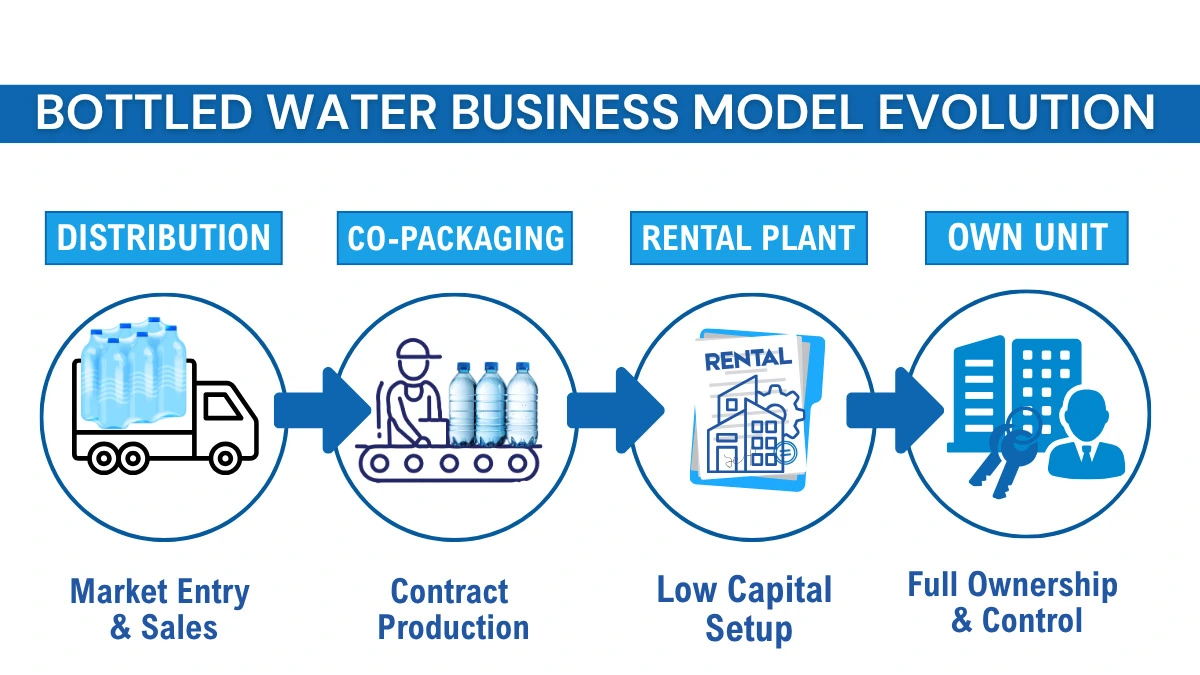
The Co-Packers, are the business owners, who do not have their own manufacturibng setups, and get the things done from the existing manufacturers. These are termed as “Re-labelers” in the FSSAI. The Co-Packers choose this business model primarily, as they are not sure of the volumes.
Old ( Pre-April 2026 ) FSSAI Compliance for Co-Packers
Like all other FBOs hey had a sealing of
- Sales Annual Turnover – 12 Lakh
- Daily Production Volume – 2000 Ltrs per Day
If they fall below the figures mentioned above, they were able to proceed just with the “Registration”. Above that, a “License” needed. Now with the new update, they will save time & money as well
The following Video explains this in details
Need Help Navigating the 2026 Rules?
Navigating these regulations is no longer about just “getting a license.” It’s about building a system that protects you from penalties while attracting the right clients.
In my 1:1 Mentoring sessions, I help you design your Lab Records, prepare for High-Risk audits, and choose the right certifications (NSF/HACCP/ZED) so your business is ready for success from Day 1.
Common Doubts About New FSSAI & BIS Rules Answered
Answer: As of the latest 2026 regulatory updates, the BIS license is no longer a mandatory requirement for starting a packaged drinking water plant. While it was previously the primary standard, the FSSAI “High-Risk” license has now become the core compliance requirement. However, certain corporate clients or contract-packing agreements may still insist on a BIS certification for brand value and quality assurance.
Answer: Following the shift from BIS, FSSAI has classified packaged drinking water under a “High-Risk” category. This means that while you may save on initial BIS fees, you are subject to stricter oversight, including mandatory annual audits, monthly microbiological testing, and a higher risk of random market sampling by Food Safety Officers (FSO).
Answer: Under the 2026 FSSAI guidelines, a full-scale internal laboratory is not strictly required as it was under the old BIS “Scheme of Testing.” Instead, plant owners can utilize NABL-accredited and FSSAI-notified external labs for their monthly, six-monthly, and annual chemical and pesticide residue tests. This significantly reduces the initial CAPEX for new entrepreneurs.
Answer: The standard FSSAI license fee for a packaged drinking water unit is approximately ₹7,500 per annum (plus GST). This is a flat fee, making it more affordable than the previous BIS structure, which could cost upwards of ₹1.25 Lakh per year for marking and registration fees. However, you must factor in the recurring costs of mandatory external lab testing.
Answer: Every plant must secure three main environmental clearances:
PCB (Pollution Control Board): You need both “Consent to Establish” (CTE) and “Consent to Operate” (CTO).
CGWA (Central Ground Water Authority): A mandatory No Objection Certificate (NOC) is required to extract groundwater, and digital flow meters with telemetry must be installed.
EPR (Extended Producer Responsibility): While many MSMEs are exempt, you must monitor plastic waste regulations as compliance is increasingly scrutinized.