Categories
Articles Mineral Water Plant Training

Mineral Water Plant Training Details

Mineral Water Plant Training – How It Started

We have been supplying machinery to the Mineral Water Industry for many years. In the initial years, we observed that almost 40 to 50 % of the businesses were not operative after a year or so. While finding out the reason, we came to know that there is not enough education to them on the aspect of how to validate their business idea, the machinery selection & other details. So initially we started with just a few 3-4 hours Intro sessions. Then on demand started Full Day Training, and now 2-Days Training Workshops. 

Mineral Water Plant Training :- Who is it for 

Though we are involved in the Mineral Water Plant Consultancy Business; we are quite open for all sorts of common work styles. The typical beneficiaries from the training would be :-

  • The Entrepreneurs who are willing to setup their own plants

This is the best possible beneficiary from our training, as we cover every set of initial information like :-

  1. What are the future opportunities besides a Mineral Water Plant like Grey Water, Water ATM, and others.
  2. The Types of Plants & Business Models w.r.t. the Investment & various considerations an entrepreneur needs to look into.
  3. What are Financials :- What would be the Return on Investment in regards to the model selected, comparison between a 2000, 5000 and just Jars Plant.
  4. Calculation of Resources :-Exact Land, Water,Power, Human Resource & Money Requirement.
  5. A classroom exercise to calculate & design your own plant capacity and how can you specify that to the suppliers.
  6. Water basics & Machinery details Session to let you know how water is the most important factor & how to create a hygiene policy around this single aspect 
  7. How to find out details of the existing working, working, deferred Mineral Water Plants in your Area using the B.I.S. Website
  8. How to do the Initial Water Analysis yourself at Zero Cost as compared to the cost offered to you by the B.I.S. approved labs.
  9. Select Marketing techniques to outcast your existing competitors in no time.
  • Machinery Suppliers who are willing to expand the scope of their offerings and collaborate

If you are an existing supplier for Blowing Machine, Filling Machine, Ink Jet Coding Machine or any other machine pertaining to Mineral Water Plant, this training can help you by understanding the business as a whole. You can also contact us to collaborate in the training. Subject to conditions, we may offer you an opportunity.

  • Domestic Water Purification System Suppliers who are willing to enter in this field

As a Domestic Water Purifier supplier, you may come across various requirements, where the client may be requiring to setup a Mineral Water Plant. This Training knowledge will help you on all the initial aspects and by collaborating with us, you can extend the opportunity in this field as well. 

  • Existing Mineral Water Plant Owners

There are many entrepreneurs who have already setup their Mineral Water Plants without a valid B.I.S. license. Many of them might have started the plant with just the Chilled Water Jar in mind,knowingly or unknowingly. But the fact is that all of them will require a valid ISI mark , which is supplied by the B.I.S. Such plants , if thinking of going for a License may require to go for a proper certified plant also attend this training.

  • Expats willing to setup plant in their native country

There are many people enquiring with us regarding setup of a Mineral Water Plant in their native country. Most of them might have settled in western countries like the U.S. or the U.K. They also need to have a proper training to setup a plant in their native country. They too attend the training.

How to get the best out of the Mineral Water Training ?

Know at exactly what stage you are.

You might have clearly defined your capacity and looking for machinery. Or you might be having land and building but don’t know how to go further. Or you might not be having any resource right now. Knwing where you are is the best thing to begin at.

Decide your timeline.

Irrespective of your stage, you need to be ready with your timeline. Meaning, you should fix up a deadline with a date , as to the terminating point for your first stage. e.g. If you have land & water ready, you should mark up the calender with a date on which you must proceed for the next task, may be drawing financial projections.

Be Flexible.

If you have decided certain plan in mind, the training may present you completely different choices. Be flexible and accept the change.

Shoot Questions

Come with questions and shoot those during the training. This is the only time when you will get an opportunity to clarify your doubts one to one. Don’t hesitate.

Be participative

We conduct various activities, e.g. calculation of Plant Capacity. It helps in actually knowing the plant capacity, which is the basis for every other detail of your dream project. If you understand this session well, the success is yours. For that participate 100%.

Network with Fellow Mates 

Alongwith you, there may be other participants as well, network with them. Exchange ideas. This is the best way to share knowledge with each other & help each other.

Shall you be able to start a plant after the training ?

Optimistically Yes. But practically, even if you do not start a plant, it should be a Knowledge Based Decision. So be ready with a “NO” decision as well. Many of the participants also drop their idea to start a plant. many of them actually take forward. Many of them alter their plans, many of them totally change the original thought.

All is well, so far its a well thought decision. As we do learn about what are the top reasons of failure. Other’s failures lead you to a Right decision.

How is the Flow of the Training

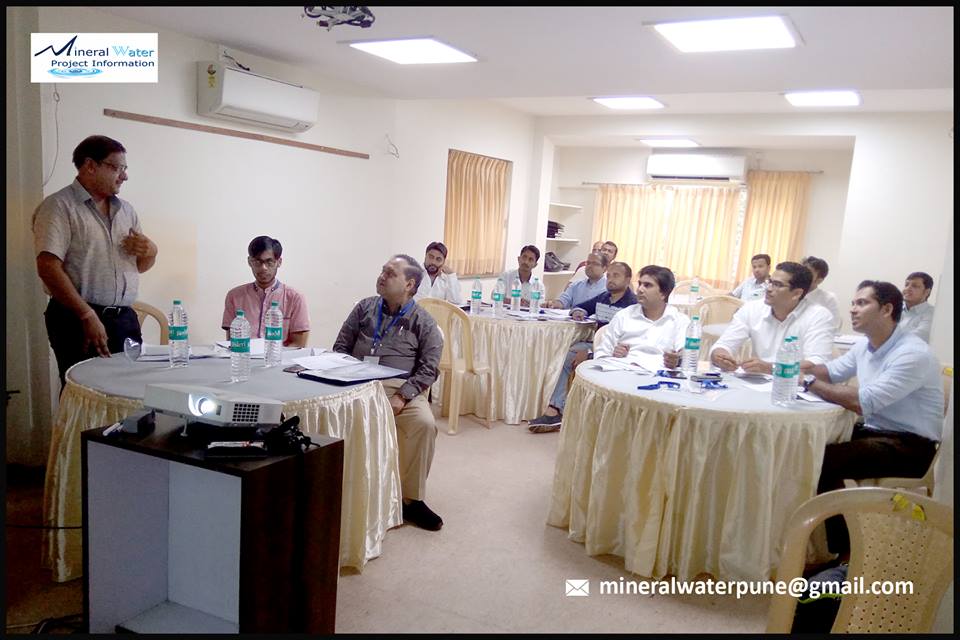
Each Session will be 90 minutes duration. After that a short break is given, considering this a Theory based session. We try our best to make it engaging through live examples, activities etc. There will be a Tea Break in morning, as well as noon and a lunch break. Participants are given some leisure during the break.

There will be Q & A Session and also a Certificate Distribution session at the end. 

Individual Counselling Sessions

We also allocate some time for individual counselling sessions. Candidates who have some confidential questions, they can ask them during that. 

Further Support

As mentioned earlier, we do support each & every participant with proper support in case they are stuck.

We also offer total consultancy to setup the plant, which includes survey, vendoring & start to end full consultancy for the plant upto the 1st batch of commercial production.

Checkout the Reviews ..

There are more than 1000 People got trained by us till date. You can read their reviews on this page 

How Can You Attend The Next Training ?

First, check the contents & schedule for the next training. Then Kindly call us to know further about the training. We shall inform you on how to reserve your seat for the upcoming training. You can do either way, through Bank or through a credit card.

Venue , Hotel Stay etc…..

You can check the FAQ page for this r even our Office Staff members will give you all necessary information.

Can’t attend the next Training ?

No issues, just subscribe to our newsletter and be informed about the next training dates, so you can plan in advance & can save on Air Travel, Hotels etc.

Categories
Articles Mineral Water Plant Cost

Mineral Water Plant Cost Components

Last Updated: March 2026

Mineral Water Plant Cost Components – what are they ?

Mineral Water Plant Cost doesn’t just include the initial sum of money you require to start or setup the plant, in fact; it also includes the running cost & operational cost calculations. I shall go into details here, and shall list the major components one by one. 

Table of Contents

#Update ( Update March 2026 )

Though major cost components remain same, some additinal costsone may need to consider freshly.

From October 2024, ISI is no more mandatory for Packaged & Natural Mineral Water. You need only the FssaI. The FssaI license for a plant costs just Rs. 7,500 for a year against what it was like 1 Lakh + for the ISI. However, the BIS has also reduced its license fees & it is Rs 25000 for a Micro Unit. The Micro unit means the Capital investment upto 2.5 Cr as per the latest budget.

Let’s see whether it affects & how this affects the Mineral Water Plant Cost
  1. The Capex will definitely come down, as the annual fees is reduced if you decide not to go with the ISI license. 
  2. As FssaI hasn’t still made any statement about the Lab being compulsory, this also reduces the cost of a Lab, which was considerable. Effect : Capex comes down.
  3. However, FssaI has also brought the SIT ( Scheme of Testing ), through which, the plant owner is required to maintain monthly test records on certain parameters, as well as six monthly & annual records for certain. In addition, the plant owner is also required to upload a report from External Lab, every 6 months. These all reports are by an external NABL, as well as FssaI approved Laboratory. This is an OPEX component. 
  4. It does look like one doesn’t need a special Chemist/Microbiologist like the BIS was demanding, you still require a responsible technical person ( Science graduate or Food Technologist ). So, there may not be much change in the manpower cost on account of this aspect. 
  5. The licensing process is made transparent, however, as Packaged Drinking & Natural Mineral Water have been declared as High Risk Foods, it has annual inspection & FssaI has made it clear that they will have a strict monitoring over quality. This affects serious maintenance cost which is an Opex Component, Operational Cost increases. 
  6. While Registration itself, the FssaI asks for submission of NOC by CGWA, for Groundwater usage. This adds up 2 costs : The Consultancy charges for compliance ( Capex ) and the groundwater charges ( Opex ). Check This Video for check how much this could be.
  7. While applying for license itself, you have to declare the “Recall Procedure” under the FssaI. This calls for a very strict & methodical approach to run plant. This is a cost. 

How can we be useful to you for this

We already have included specific Costing focused sessions in Trainings.

In the extended version, you can get your costing verified & validate.

If your whole plan calculation is ready, you can just get our Aqua Finance Metrix Service, through which you can cross verify your plant calculation

In case, you believe you already possess business experience, and do not wish to spend time for getting trained ( it’s just 1 hr a day, in evening, mon-fri for 2 weeks, Online, Live Session – no recording ), but want to have an overview through quick session + Aqua Finance Metrix, You can check our “1:1 Orientation  + Aqua-Finance Metrics ” Service. This and additional services are posted on our page : consultancy

Is it required to be considered by an Entrepreneur?

Yes. I don’t say, you should be a cost accountant; but you should know what will the costs be in order to run the business profitably. Often entrepreneurs are seen to be madly driven by emotion alone. Their decisions should base on Emotion + Data. This costing awareness will prepare their enterprise to be run in profits over the years.


Details about Each Cost Component :-

# Machinery & Equipment

This Cost Component consists of the costs towards the following :-
(1) Cost of Borewell :-

The Borewell is required to extract Groundwater from Land. It depends upon how much water you will require for the plant to run. However, the Groundwater is not at our will. It differs from place to place, season to season. But solely, the cost of a Borewell is usually calculated from the depth you need to drill through. 

Even if you already have a borewell, still you should know how much is it extracting from the ground. Then you will need to compare the same (the output) with your desired production capacity. If it is less than what you propose to produce; then you might need to fill in the gap between the demand-supply by procuring water from outside or may be a second borewell. This additional cost also needs to be taken into account.This cost can be had from the Borewell Suppliers. There can be local persons or you can refer the suggested directories.

(2) Cost of Water Treatment Plant

This is actually a set of Equipment, through which the raw water is passed to get the desired resultant water. The deciding cost factors for this is the Raw Water Quality. Usually, if you present this to any NABL Lab, they will offer you a Test Report. On the basis of this, you can get a Quote from any Water Treatment Plant Supplier or Mineral Water Plant Supplier. 

#Tip :- If you have yet not decided for a Mineral Water Plant; or you just need a proper quote for evaluation purpose at this stage; YOU NEED NOT GO TO A LABORATORY at all.

Alternate Way :-

(1) Attend our Mineral Water Plant Training, in which we share you a no cost method by which you would be able to design the exact specification for the Water Treatment Plant for your Mineral Water Plant. Once you are ready with your exact Water Treatment Plant Capacity, it is very easy to get the Water Treatment Plant Cost for your Mineral Water Plant.

# It is mandatory to get water tested from an FssaI Approved laboratory, when you are submitting samples from your plant. It is a later stage, NOT NOW. At this stage you can skip this.  

(3) Cost of Bottling Machinery

Bottling Section is divided into 3 sections :-

  1. Bottle Making Section (Blowing Machine)- 
  2. Bottle Filling Machine
  3. Packaging & Boxing Machines

Usually, the cost of Blowing Machine & Filling Machine varies with production capacity; but the secondary packaging machines remain constant. Hence, you should define the exact production you for getting the Bottling Machinery  Cost. 

During our Mineral Water Plant Training, we take a dummy case study with sample product mix & train the participants on how to calculate the mineral water plant capacity, so that they can specify the exact specifications for the machines they require.

(4) Cost of the Lab as per ISI

The Laboratory Equipments have been specified by the B.I.S. and the cost can be had from suppliers of the same. 

( This is optional as FssaI hasn’t yet come out with any mandatory declaration )

# Mineral Water Plant Construction, Utilities, MEP etc.

Mineral Water Plant Construction can be divided into The Shed Construction Cost, The Cost of the Interiors & Cost towards outer beautification etc. For all of this, you can contact local suppliers. Once you know how much is the exact land,plot needed etc, you can specify that to get exact quotes. 

Once you define your machinery properly with their exact capacity, you can get the exact quotes and the dimensions for each machine. Once this is had; you can draw your Plant Layout properly. Once the layout is clear, the Covered Shed area and area needed for the utilities and other sections such as the MEP.

Similarly, the Internal Electrification & Piping Cost can be exactly laid down once the total connected load and distance between the machines is clear from the layout.

#In the Mineral Water Plant Training, we train the participants to prepare their own layout themselves so that, once the Shed Area and outside area is defined, the construction cost can be calculated.

# It is advisable to consider the Cost of the Total Plot into your project costing.

For all of this, you can hire local contractors, but with expert guidance who know the requirements for a Mineral Water Plant or Packaged Drinking Water Plant. We offer this service as “Mineral Water Plant Technical Consultancy”, in which our technical team guides you on every aspect, at every step of the Mineral Water Plant you wish to execute. The advantage : You will do minimum mistakes.Kindly contact us for the same.

#Office Furniture & Softwares

While the actual machinery involved in the production process are the important considerations, the Office furniture & other cost components are equally important. Moresoever, they will be very necessary to see that you incur minimum wastage & process losses. We strongly recommend good ERP system, Vehicle tracking devices installed on vehicles of the dispatch personnel is a wise investment. Such considerations should be welcomed. 

This whole thing can be summed up as the starting capital you require to initiate and setup your project. 

Other Operational or Running Cost

This is the running money you require to make your investment work and generate you profits out of that. This includes mainly the following things :-

a. The Purchase & Consumables cost which includes the packaging materials used for bottling the water, plus the cost for material used indirectly such as filters, which is not the part of the final product showcased, but indirectly responsible for the produce of that. These are all tangible items.

b. The Overheads cost which includes human resource, electricity, capital cost, marketing cost, licenses & renewals cost.

How to Calculate this Cost ?

It is the running cost, and not just a 1-time investment calculation as mentioned in the other article on Mineral Water Plant Cost. For this you need to know, as an entrepreneur, as to what are the cost components in detail. And the prices of them. We have already covered this aspect in the previous paragraph.

The prices of the respective components also may change from time to time, hence these price considerations should also be kept in mind & the market trend too. To calculate the cost, use the following method :-

Make 5 separate tables for :-

  • Purchase & Consumables
  • Manpower Cost
  • Electricity & Other Overheads Cost
  • Bank Cost
  • Licenses & Renewal Cost 

List Down their Monthly & Annual Consumption

From the Market survey, you might arrive at your approximate figures which you intend to produce. You can thus calculate how much would be your outlay for each of the cost component. 

Arrive at the Fix Operational Cost monthly Cost

Total each one from the mineral water plant cost components and you will get the monthly figure. This is your monthly operational cost.

We request participants in our training to present their received quotes & discuss, compare various suppliers’ quotes received during training.

Mineral Water Project Information Reviews

We suggest you to listen to the following review from Mr Anilkumar of Bangalore, who explains the importance of understanding the Mineral Water Plant Cost Components in details :-

Besides Anilkumar, there are a plenty of participants who have reviewed our trainings from time to time.

Note :-

It is observed that maximum entrepreneurs fail as they don’t pay any attention to this section & plan their dreams badly. Entrepreneurship is not blind thinking. 

Why listen to us ?

We are professionals in this field, water business and also offer Consultancy to setup your Mineral Water Plant. Please check the About Us section to know who is behind this.


Mineral Water Plant Cost & Setup FAQs (2026 Updated)

What is the total cost of a mineral water plant in 2026?

The minimum viable cost to setup a plant is 70-100 Lakhs.
– Considering at least 12000 Bottles & 200 Jars per day
– Daily 1 shift, Annually 300 shifts assumption
– Considering 25% R.O.I.
– Consists Cost of Machinery, Shed Construction, Electrification, Licensing.
– Not Considering Land Cost

Break-up of the Cost ?

– Machinery 40 Lakh
– Construction 20 Lakh
– Utilities 10 Lakh
– Licensing 5 Lakh
– Buffer Capital 15 Lakh
– Electrification & Interiors 10 Lakh

What About Operating Costs ?

Operating Costs are typically of 2 types;-
– Direct or Flexible costs which vary with the size of production, SKU
– Examples are PET Preforms, Caps, Labels etc.
– Indirect or Fixed Costs do not change irrespective of Production Lot
– Examples are Rent, Office Expenses, Salaries, Electricity etc

What licenses are required for a mineral water business?

– All the Local Licenses
– Udyam aadhar Card
– Pollution Board C2E ( Consent to Establish & Operate )
– FssaI
– CGWA NOC

How much space is needed for a 2000 LPH plant?

– 5000 sqft Open Plot
– 3000 sqft Shed on the same

Categories
Articles Mineral Water Plant Cost

Mineral Water Plant Cost : Why Specs Must Come Before Supplier Quotes

Last Updated: April 7, 2026 | Industry Advisory

Mineral Water Plant Cost: Your Top 5 Questions Answered by an Expert

How to Calculate Mineral Water Plant Cost in 2026: A Veteran’s Perspective

Table of Contents

Mineral Water Plant Cost is unarguably the first consideration for any entrepreneur who is setting up a Mineral or Packaged Drinking Water Plant. While the sense of opportunity in the water business is massive, your decision to move forward—or stop entirely—usually hinges on this one number.

However, in 2026, the definition of “cost” has changed. With the transition to new FSSAI high-risk food norms and shifting machinery benchmarks, a generic estimate is no longer enough. To succeed, you must look beyond just the price of a machine and understand the total project investment required to build a sustainable, profitable brand.

Visual Guide: Understanding Mineral Water Plant Investment Logic

Watch the Core Cost Logic: Before you read the 2026 updates below, watch this video to understand the fundamental financial logic of a water plant. Note: While the technical cost principles remain 100% valid, see my 2026 Advisory Note at the 13:05 mark regarding the shift to mandatory FSSAI High-Risk licensing.

Why Most Water Plant Cost Estimates Fail (and How to Avoid It)

1. The “Machinery-Only” Blind Spot

Most estimates fail because they focus solely on the machinery. When entrepreneurs ask, “What is the cost?”, they are often given a quote by a supplier that only covers the RO system or the bottling line.

How to Avoid It: You must treat your plant as a complete ecosystem. In 2026, a survival-ready estimate must include “Hidden Infrastructure” like specialized flooring for FSSAI compliance, electrical load management, and initial Opex. Failing to account for these isn’t just a math error—it’s the leading cause of “Negative Profit,” where you have plenty of customers but still lose money every month.

2. Ignoring the “OK” Investment Zone

A common reason estimates fail is that they are “one-size-fits-all.” In reality, the right cost for a plant depends entirely on your background and scale. What works for a seasoned business family starting a high-speed automated line will not work for a first-generation entrepreneur starting with a 20L jar business.

Every entrepreneur has an “OK” Investment Zone—a financial comfort level where they can operate without over-leveraging.

  • How to Avoid It: Before looking at machinery prices, you must define your Business Model. A ₹50 Lakh investment might be “OK” for one person but a massive risk for another.

  • The Reality Check: The market doesn’t care about your budget; it has fixed entry costs for quality and compliance. If your “OK” zone is ₹5 Lakhs but the business model you’ve chosen requires ₹15 Lakhs to be profitable, the project is destined to fail before it starts. You must align your investment capacity with a realistic business model to ensure the venture is actually worthwhile.

3. Confusing “Machinery Price” with “Project Cost”

The most frequent cause of project failure is the B2B Marketplace Trap. When you search for costs on B2B Marketplaces like IndiaMart, TradeIndia, or Alibaba, you are looking at machinery suppliers, not project consultants.

A supplier’s job is to sell you an RO system or a filling machine. They rarely mention the civil works, specialized plumbing, laboratory setup, or the electrical infrastructure required to meet 2026 FSSAI standards. In our training sessions, we often see a “reality shock” when we compare the ROI of different models—like a 2000 LPH vs. a 5000 LPH plant. Many entrepreneurs are surprised to find that the machinery is often less than 50% of the actual capital required to go live.

📍 How to Avoid It: Never base your business plan on a machinery quote alone

💡The Veteran’s Tip: A quote tells you what the machine costs; a Detailed Project Report (DPR) tells you what the business costs. To avoid mid-project funding shortages, you must factor in the “Non-Machinery” essentials—from flooring and drainage to licensing and brand launching—before you commit to a single vendor.

The 2026 Cost Blueprint: Capex & Opex Categories

While the final financial projections for a bank loan are the domain of a Chartered Accountant, the technical inputs must come from a veteran consultant. To simplify your planning, we categorize these into two distinct pillars: Capex (Initial Setup) and Opex (Running Costs).

In the current regulatory landscape, cost components are no longer static. For instance, in 2026, we must now account for Extended Producer Responsibility (EPR) and plastic recycling costs right from day one. These aren’t just “miscellaneous” items; they are core components of your per-bottle cost.

  • Major Components: Includes land, building/civil works (as per FSSAI/BIS hygiene norms), the core water treatment plant, and high-speed packaging lines.

  • The “Invisible” Essentials: Utilities like dedicated transformers, heavy-duty DG sets, laboratory equipment for mandatory testing, and internal plumbing.

Expert Note: We have dedicated a separate, detailed guide for each of these components to help you understand the technical specifications before you buy.

Explore the Detailed Cost Components Guide

From Investment to Income: Calculating Your ROI

Knowing the setup cost is only 50% of the equation. A ₹30 Lakh investment is either “expensive” or “a bargain” depending on your Time to Recovery.

In 2026, simply “selling water” is not a business plan. To ensure your plant doesn’t become a liability, you must master the 5-Step Profit Formula that balances your Capex (Setup) with your Opex (Running costs).

⚠️ The “Hidden” Success Factor

Turn-key suppliers sell you machines, but they don’t sell you a market. Many plants fail within 18 months because they calculated their “Cost of Machinery” but ignored their “Cost to Serve.” If your distribution costs eat your margins, your investment is at risk.

To see a real-world breakdown of how to protect your ₹25-30 Lakh investment and generate a sustainable monthly income, read our deep dive here:

👉 The 5-Step Formula to Calculate Mineral Water Plant Monthly Profit (2026 Edition)

Cost vs. Investment: Shifting from a “Price” Mindset to a “Business” Mindset

Most entrepreneurs start with a simple question: “How much does a 20L Jar plant cost?” or “What is the price of a 1L bottle line?” While, even in 2026, these are valid starting points, they reflect a “vague dream” rather than a concrete business plan.

To move from a dreamer to a successful plant owner, you must understand the critical difference between Project Cost and Business Investment:

  • Mineral Water Plant Cost (The ‘What’): These are the individual expenses required to build and run the enterprise—the machinery, the civil work, the licenses, and the raw materials.

  • Mineral Water Plant Investment (The ‘How Much’): This is the actual liquidity or capital required to cover those costs over a specific timeline. It includes your safety net for the first few months of operation.

The Reality Check: A supplier gives you a “Cost.” A consultant helps you determine the “Investment.” Knowing the cost of a machine is useless if you haven’t planned the investment required to keep that machine running until the business breaks even.

(Note: you can specifically lcheck 20-ltr-jar-mineral-water-plant-cost model also

How to Calculate Your Custom Investment: The “Product Mix” Formula

One of the most important things to understand is that there is no “fixed price” for a mineral water plant. Anyone giving you a flat rate without asking about your market is likely misleading you.

The total investment is a variable that depends entirely on your Product Mix (e.g., 20L Jars vs. 1L Bottles vs. 250ml Cups) and your intended Daily Production Capacity. These two factors dictate everything—from the size of your RO system to the speed of your filling line and the scale of your civil work.

The Professional Workflow:

  1. Define the Strategy: You first decide what the market needs (The Product Mix).

  2. Calculate the Technicals: We derive the exact machinery specifications and utility requirements from that mix.

  3. Finalize the Projections: Once these technical statements are ready, you can present them to a Chartered Accountant to prepare the ROI projections and bank-ready reports.

Expert Insight: In our Aqua Finance Metrix sessions, we don’t just give you numbers. we teach you the process to arrive at these figures yourself. This ensures that when you go to a CA or a bank, you are backed by technical logic, not just guesswork.

Final Strategic Note

To ensure your business is sustainable beyond the launch phase, you must distinguish between two types of financial requirements:

  • A) Capital Expenditure (Capex): This is the “Initial Investment” required to set up the plant—machinery, civil work, and licenses. Most people stop here, but this is only half the story.

  • B) Operational Expenditure (Opex): These are your monthly running costs—raw materials, electricity, labor, and distribution. Your “Investment” must include enough liquidity to cover Opex until the plant reaches its break-even point.

Take the Next Step: In our 1:1 Mentorship and Aqua Finance Metrix sessions, we dive deep into these calculations. We don’t just show you how to start; we show you how to stay profitable using verified 2026 data. Or Join Training

A Fresh 2026 Lookout to Most of the Questions

– What is the average cost to start a 1000 LPH Mineral Water Plant in 2026?

While machinery for a 1000 LPH plant typically ranges between ₹7 Lakhs to ₹12 Lakhs, the total project cost is often higher. For a fully compliant unit including civil work, laboratory setup, and 2026 FSSAI licensing, an entrepreneur should budget between ₹15 Lakhs and ₹22 Lakhs. This ensures you aren’t just buying a machine, but building a legal manufacturing facility.

Is BIS certification still mandatory for packaged drinking water in 2026?

As per the latest regulatory shift, FSSAI has reclassified packaged water as a “High-Risk Food Category.” While the mandatory requirement for the ISI mark (BIS) has been eased in favor of a stricter FSSAI Scheme of Testing, most successful plant owners still opt for voluntary BIS certification. It remains the gold standard for consumer trust and a major competitive advantage in the Indian market.

– How much profit can I expect from a 20L Water Jar business?

The profit margin for 20L jars is generally healthy because the packaging (the jar) is reused. On average, the production cost for a 20L jar (including water, power, and cap) is ₹8 to ₹12, while it sells in the market for ₹35 to ₹60. A well-managed plant selling 500 jars daily can see a return on investment (ROI) within 12 to 18 months.

– What are the “hidden costs” in a Mineral Water Plant setup?

Most entrepreneurs fail to account for Operational Expenditure (Opex). Beyond the machinery, you must factor in the cost of Extended Producer Responsibility (EPR) for plastic recycling, quarterly water testing fees, industrial electricity deposits, and specialized flooring/tiling required for FSSAI hygiene compliance. These can add 15% to 20% to your initial budget.

– Can I start a water business with a small budget?

Yes, but you must choose the right model. If your “OK Investment Zone” is under ₹10 Lakhs, Co-Packing can be a better option than establishing an individual production 1L bottle line. The key is to avoid “under-spec” machinery that fails to meet quality standards if having a production unit, as a single failed lab report can result in plant closure under current high-risk food norms.