Categories
Mineral Water

What is Packaged Natural Mineral Water Actually ?

Every Bottle of Water is NOT Mineral Water
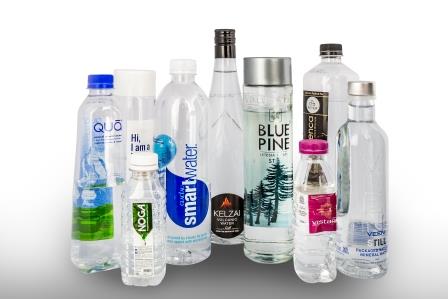
Premium Bottled Water sold in India

We generally call it “Mineral Water” , however, it is not usually “Mineral Water”. In every training, we ask the participants about what is their understanding of “Mineral Water”, though generally we call it that way. To cut a probable long story short, please understand that there is a central institution in India, called the B.I.S. which is the decision making power for all citizens of India, about which water you can drink (safely). I mean the real water, which quenches your thirst when you really feel thirsty. Till date , the “Flavoured Water” or “Alkaline Water” and many such categories are still not approved by the B.I.S. Let’s not talk about them, and see what the BIS has approved.

There are just 2 categories

Yes, there are only 2 categories as of date :-

  • Packaged Drinking Water (Standard IS 14543)
  • Packaged Natural Mineral Water (Standard IS 13428)

What is the difference in these ?

(Listen to the audio Discussion took place during one of our training sessions about this subject)

Taking it very simply, the Natural Mineral Water is the one which when used for drinking has all the hygienically good minerals & compositions in-built. The natural mineral water becomes “Packaged Natural Mineral Water” when it is Bottled or packed. Whereas the other one – the packaged drinking water is a modified water by physically removing the whole dissolved particals (#TDS) first (by #RO method ) and then making it suitable by adding the required dosages of useful compositions back.

#RO Method : Using Reverse Osmosis Filtration method, through which the finest of the impurities which are present in form of Totally Dissolved Solids (TDS). This TDS is measured in PPM Particals per Million or mg/l Miligrams per ltr. Hence when we say the water TDS is 200; it means 200 particals of solids in 1 million (10 lakh) particals

How to know about this more ?

Mineral Water Project Information conducts training for people venturing into water business. Visit Youtube Chanel or Download Our App from Playstore

In Natural Mineral Water, Compositions are retained

The Natural Mineral Water Unlike the Packaged Drinking Water, retains the original composition intact. The #TDS mentioned above is not removed from that. Hence no RO Method is involved. Just have a look at the TDS mentioned on the some of the Packaged Natural Mineral Water :-

  • Kelzai Volcanic Water …. 198- 248
  • VEEN …….. 289
  • Natural Springs (for Vistara) ……216 to 252
  • Qua ….. 200-250

#TDS means the Total Dissolved Solids in the water.

# TDS of Packaged Drinking Water like Bisleri is usually below 100

What does the BIS say about this ?

While considering Natural Mineral Water, the BIS says that it should be in the range of 150-700 TDS. In other words, in no condition it should be lesser than 150 PPM.
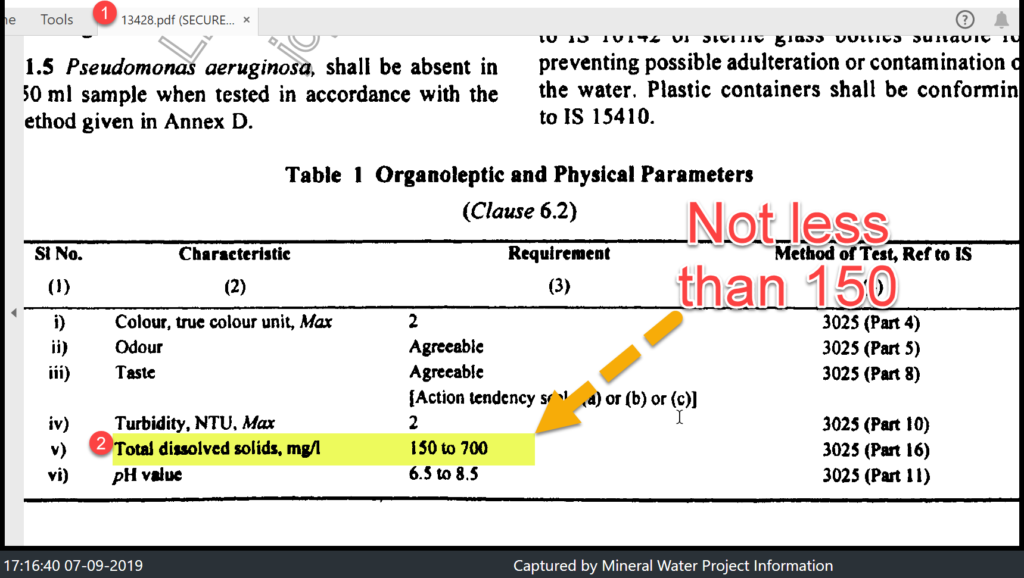
Natural Mineral Water TDS Range
TDS Range in Natural Mineral water

What is the range for Packaged Drinking Water as per the BIS ?

BIS has mentioned the range like “Maximum” 500, however, no Minimum has been mentioned.
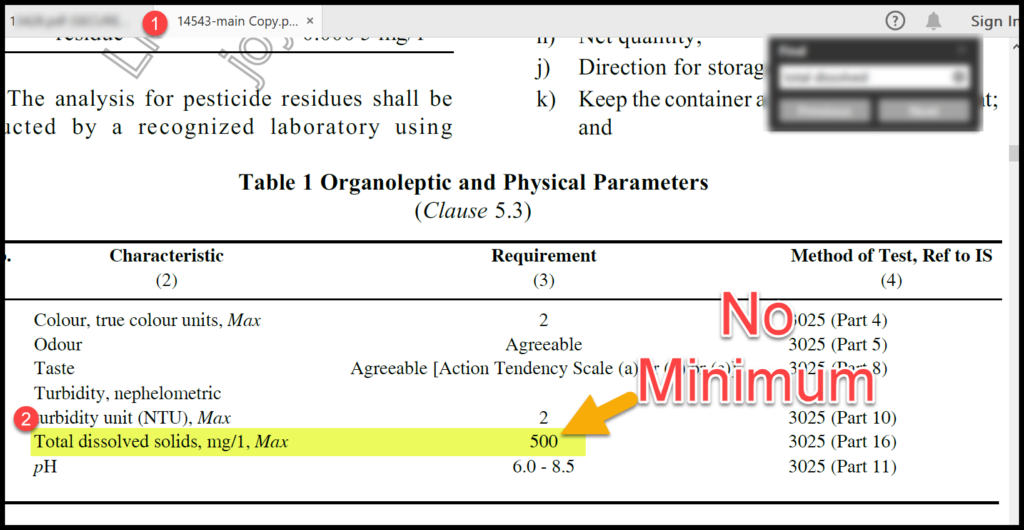
TDS Range for Packaged Drinking Water

Why there is a difference ?

The Packaged Drinking Water is actually a newly made , modified water from its original drawn (Raw Water), it can have the exact composition. However, in the Natural Mineral Water, we are not removing the Dissolved particals, in a belief that they are in exact proportion as per described, no matter the TDS is more. Rather, it is observed in these waters that these properties play their part at a minimum TDS level, which is 150 minimum.

What are some other Parameters ?

Calcium & Magnesium

Every Brand had mentioned this on its label about the quantities present :-

Calcium :-

  • Kelzai : 32-36 mg
  • Blue Pine : 3.6
  • Veen : 48.38 mg
  • Natural Springs : 31-51 mg
  • Qua : Less than 60 mg

Magnesium :-

  • Kelzai : 3.16 mg
  • Blue Pine : 1.4
  • Veen : 24 mg
  • Natural Springs : 4.61-7.8 mg
  • Qua : Less than 15 mg

Permissible Range by the BIS :

For Calcium upto 100 mg/ltr , for Magnesium it’s 50 mg/ltr
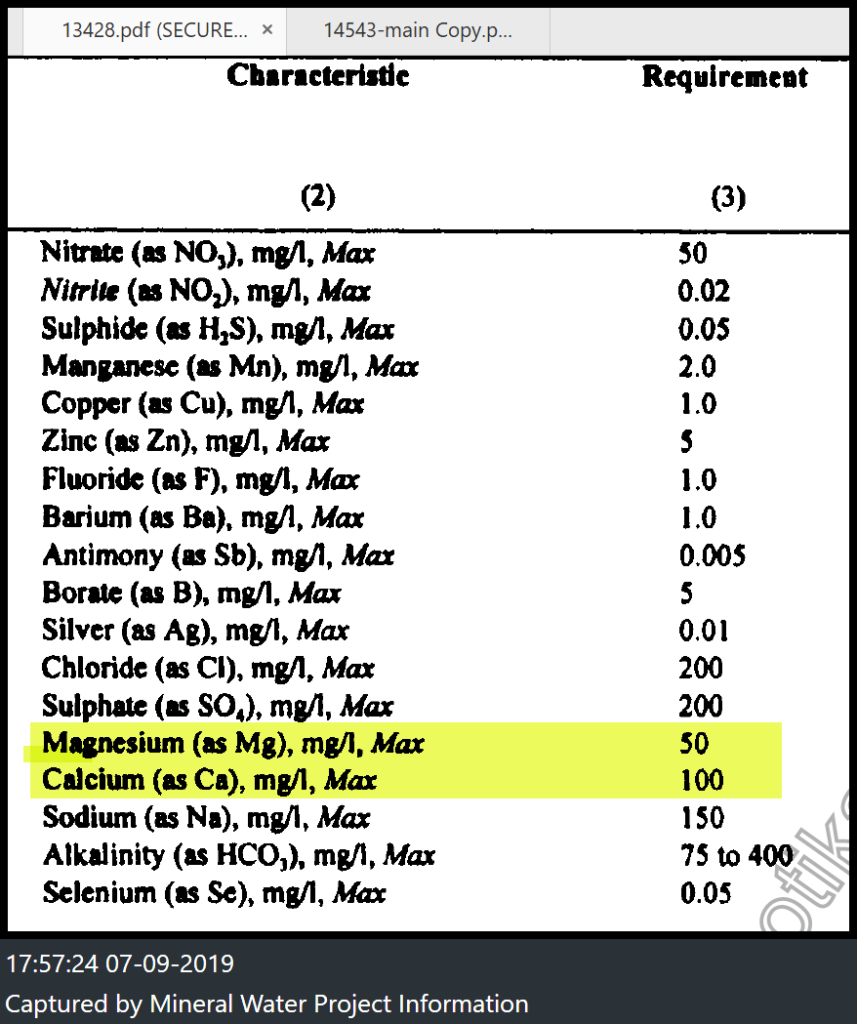
Calcium & Magnesium Level in Natural Mineral Water

From the above data, we can easily notice that “Veen” has more percentage of Calcium & Magnesium in it. It is in permissible range. As per a post on Medical News Today Calcium as we all know is vital for Bone Health, if present more, also needs Magnesium to absorb that. The presence of both of these Minerals are extremely beneficial to our body. The Veen Website clearly claims the advantages , that they are naturally present in the water.
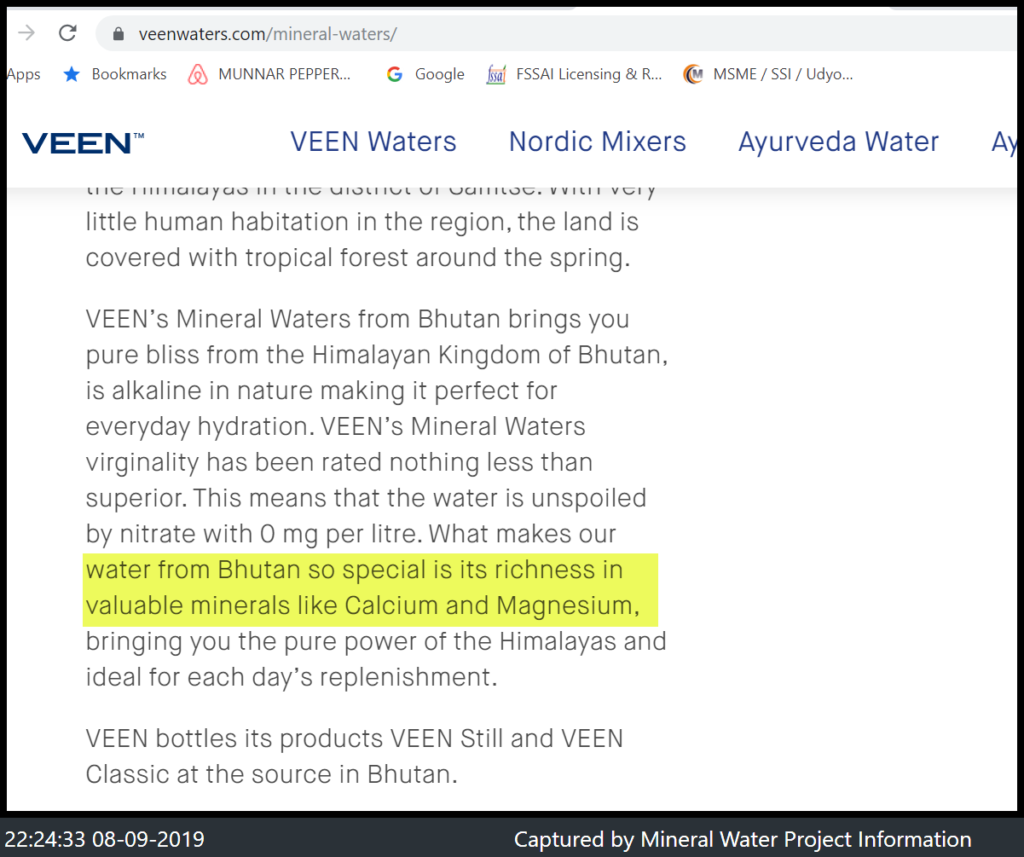
Veen Still Website
Veen Still Website

But why these Mineral Waters are so expensive ?

Look at the Price it’s sold at ..

BrandQtyPackaged InPrice Rs
Veen330 mlGlass Bottle200/-
Qua500 mlPET Bottle65/-
Kelzai500 mlPET Bottle65/-
Kelzai750 mlGlass Bottle375/-

Water, if not packed, and used as it is, without any treatment except the minor ones like physical filtration, will not be expensive at all. Hence if you consume these all waters at its source (e.g. Himalayas), it would be almost free. However, when it is commercially bottled, it will attract all the norms to be standardised as per the B.I.S. standards, which more or less implements the Codex practices. Codex is collection of all food related standards created across the world.

But what makes them so expensive ?

Reason no.1 : It is not available everywhere

Right or wrong, scarcity of anything makes the thing more valuable. As the Water from Himalayas is not available anywhere in India, it makes that unique. Of course, when Branded in a proper way.

Reason no.2 : The Distribution Cost

Unlike the Packaged Drinking Water, which can be produced anywhere, the Natural Mineral Water is produced at just the very location; hence taking the bottled water to all places is a cost.

Reason no.3 : Protection of Source

In Natural Mineral Water; the SOURCE from where it is obtained becomes the single most valuable component. And the protection of the same, to save the same from any manual intervention becomes a very huge task, resulting into incurring costs at various locations from the point of source till the point of availability.

Reason no.4 : Quality Control Cost

As the source for this water is natural, the impurities besides the Total Dissolved Minerals can be a parameter to be monitored on a continuous basis. This needs sampling, re sampling, Q.C. at labs, a more regular & engaged task, compared to that of the Packaged Drinking Water. This adds up to the cost to a great extent.

Reason no.5 : Branding & Marketing Cost

The market for this water is surely not the one like for Packaged Drinking Water. It’s little different, an “Up”market if you wish to call it. Obviously the strategies also differ. The placement, marketing, influencers also vary from Market to Market. While camels are ok for a Bisleri Campaign; a film star Radhika Apte does the Smart Water Campaigns, and a Water sommelier like Ganesh Iyer is marketing Veen. This is surely a cost.

Summary

Market for Natural Mineral Water is Different

Yes, it is different, however, it’s emerging. If you stay in hilly areas, like the western ghats in India, it’s quite unexplored.

You need to apply a different approach

To make money with the Natural Mineral Water, you will need to apply a totally different approach, as the rewards will be huge.
Categories
Uncategorized

Case Study Tata Water Plus

Tata Water Plus

While moving in Chennai, at Murugan Idli near Egmore, I asked for “Bisleri” water; which has become a slang for Pure Water in India. Asking for Bisleri is telling the guy like “Please give me pure, good,safe hygienic bottled water“. Obviously, whichever brand he serves is acceptable. However, a little better informed person like me goes further & checks something minimum like the ISI mark on the same (Its compulsory). If I don’t observe that, then at least the fssai mark.

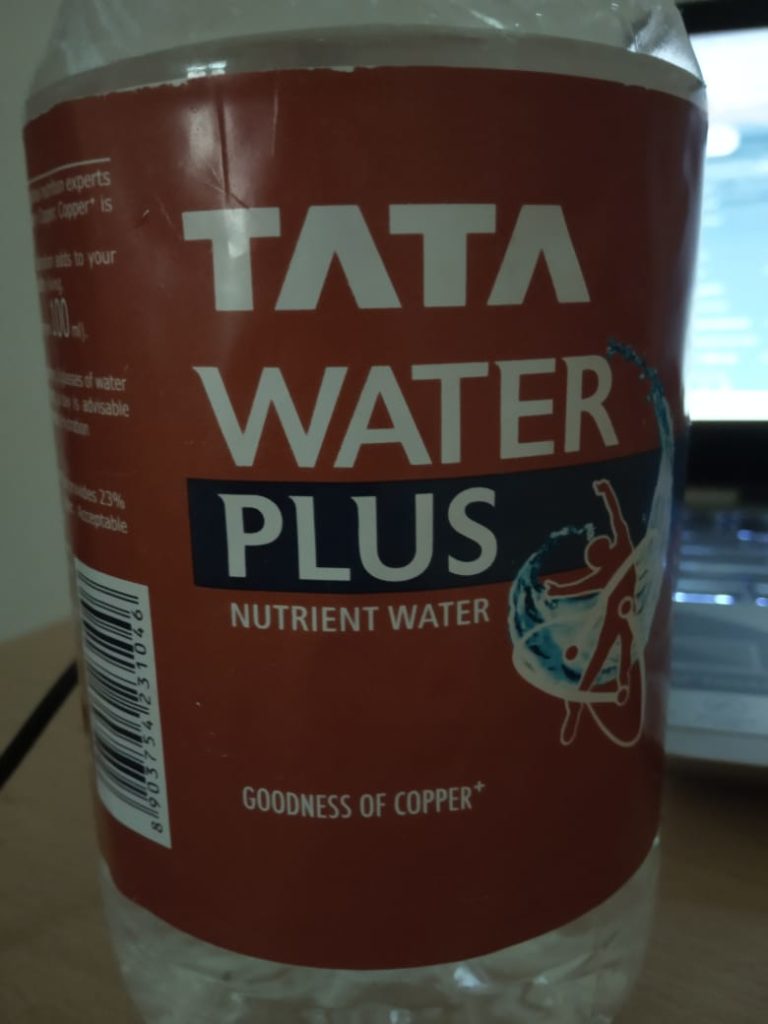
So, the guy served me a bottle, which very much looked like a regular packaged drinking water bottle, costed Rs.20 as all the others, and was marked “TATA WATER PLUS”. The brand “Tata” made me very curious as it has a proud feeling in almost all Indians. And this was not Packaged Drinking Water, it was called as “Nutrient Water

Tata Water Plus Water Bottle
A 1 Ltr Bottle of Tata Water Plus

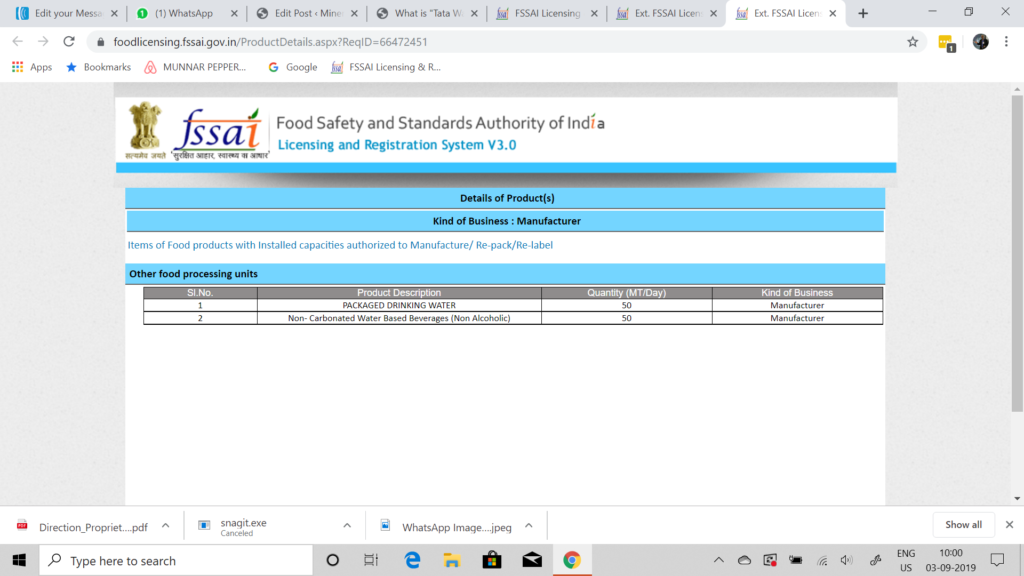
I studied the labels in detail and found out, that it is “Nutrient” Water; which is a JV by the Tatas & Nourishco Beverages, which has several plants where it is manufactured. We did search one of the license numbers, and found the following results :-

Place of Manufacture

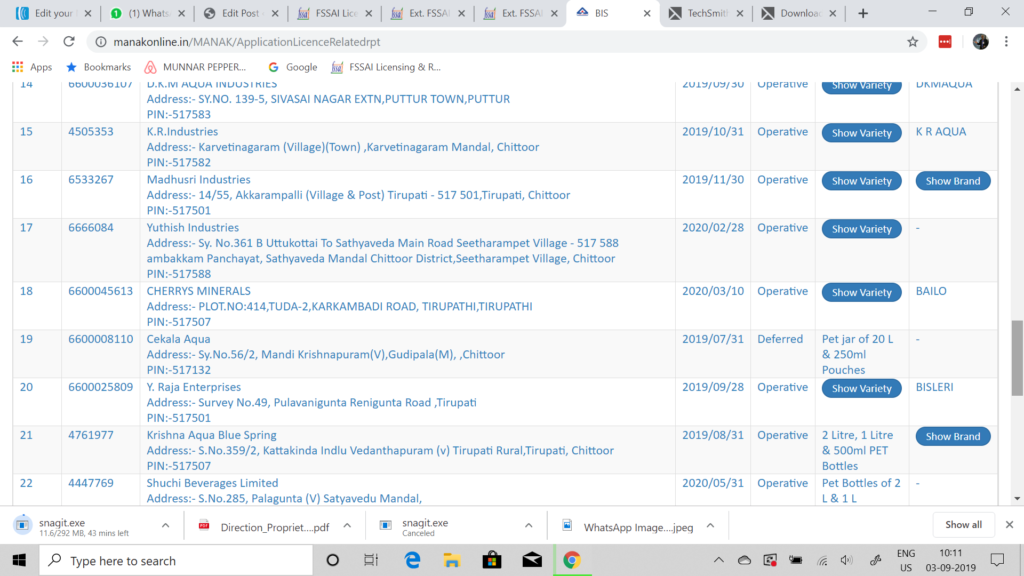
This place has also been declared as “Packaged Drinking Water”, so I used the BIS website to do a search

You may check “Yuthish Industries” , status as “Operative

The Licenses from the manufacturer are also active. Both : the BIS as well as the fssai, plus the brand/business owner : Nourishco. Hence all is well.

The why this water is not “Packaged Drinking Water ?”

The manufacturer’s premises is used, which is under the BIS, however, the brand which is packed “Tata Water Plus” is not BIS compliant, hence it is not Packaged Drinking Water. Rather, it’s a choice of the brand owners to be different & to offer Nutrient water, which is a proprietary food.

Categories
Mineral Water Business Mineral Water Plant Cost

Low Cost Mineral Water Plant Business

Low Cost Mineral Water Plant

Whenever someone is thinking of going for a Low Cost Mineral Water Plant, there can be 2 -3 ways :

  1. Starting a low budget mineral water plant , with ISI
  2. Starting an RO Plant with Chiller , without ISI
  3. Starting a Mineral Water Business, with someone else’s production unit

Starting a Low Budget ISI Water Plant

Starting an ISI Water Plant requires you to be aware of Mineral Water Plant License Cost. It means installing all machinery confining to the B.I.S. Standards as per IS-14543, which is the standard set for Packaged Drinking Water (Technical Name for otherwise called “Mineral Water”). The cost of such a plant will include the cost of lab, Filling Machine, Plastic PET Blow Machine and plant construction as per ISI.

Going for Low Budget is actually going for a small scale mineral water plant. You will need to cut down the Mineral Water Plant Machinery Cost. For Example, instead of going for a 60 BPM machine you can go for a 24 BPM machine, or you can totally avoid the Bottles Manufacturing. In such a case, you can go for a small Jars Plant or Pouches Plant (if permissible in your state). If you are going for all 3 varieties like Bottles, Jars & Pouch; and still want to have a low cost mineral water plant, then you may need to get the bottles manufactured by some other source. This can cut the investment size-ably. Check the plastic pet bottle blowing machine price to know this. You can refer to the BIS website for the BIS rules & can also refer to the Cost Article to get more ideas on an ISI RO Plant Project Cost.

Can RO Plant with Chiller be the Option ?

Chilled Water Non ISI Jars

People often confuse these type jars with the BIS approved 20 Ltr Transparent Jars, also called as “Bubble Tops”. There will be huge difference between a 20 Ltr Jar Mineral Water Plant Price (ISI) & an RO Plant with Chiller Price in India. As the former confine to ISI standards and the latter doesn’t. RO Plant with Chiller is NOT covered under the BIS premise, hence you always run a risk of your unit getting sealed, though clear policy is still to arrive.

Starting a Mineral Water Business with Someone else’s Production Unit

This means you will just own the brand, do marketing & someone else with a valid BIS license & production facilities will produce the bottles or Jars for you. This will save you from Mineral Water Plant Machinery Cost, Mineral Water Plant License Cost and you can be perfectly achieving your goal :- Having a low cost mineral water plant project.

This is also referred as “Co-Packing” Business. A new term emerging. It can be started with a very low investment compared to a manufacturing unit. You can refer to the special Playlist we have created on our Youtube Channel. We also offer consultancy for this called as “Tri-Party Consultation“.

We also throw light on this during our Online Training Sessions.

Having own , even a small water bottling plant is always an edge over getting it done from outside. But this can be a viable solution for those who wish to start with a very small budget. Look at the following success story :-

A small Budget can also make your fortune !

Categories
Plant Layout

Packaged Drinking Water Plant Layout- 4 Step Guide

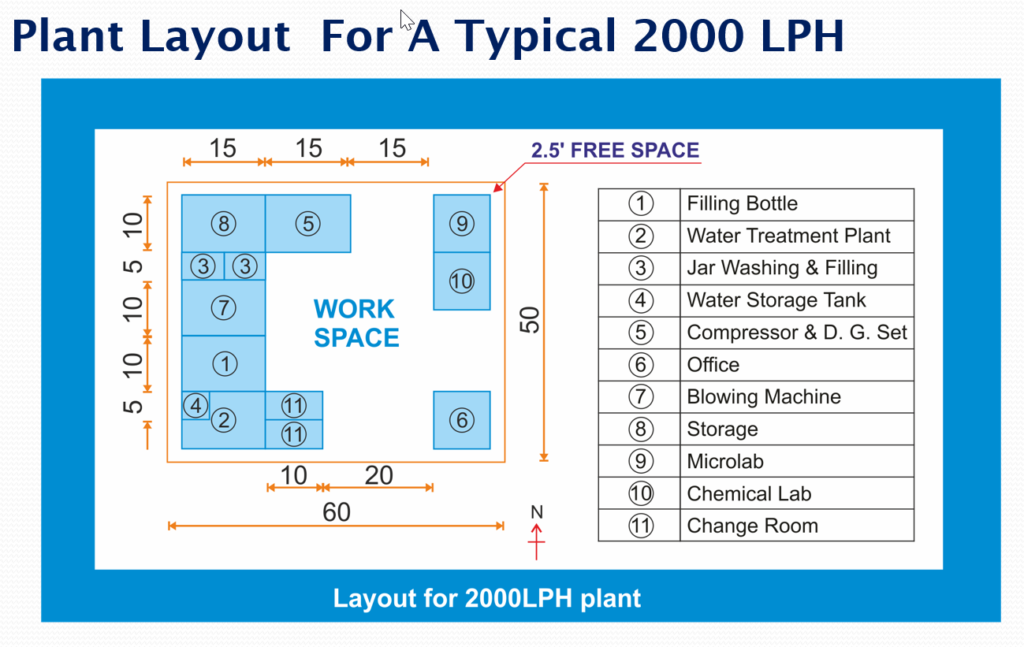
Sample packaged drinking water plant layout
(Request Not to Copy & Use as it is)

Packaged Drinking Water Plant Layout design is a very important step in setup of a plant. It not just gives a picture of how, what, where the elements are places, but also an effective tool to improve your overall plant efficiency.

Steps to Arrive at your Plant Layout

1. Mineral Water Plant Design and Plant Capacity

We have typically observed that this is the place where the entrepreneurs make maximum mistakes. Whenever, an idea of a Packaged Drinking Water Plant strikes to them; they hurriedly google it. Then Google, from it’s most intelligent sources puts results in front of them, which are dominantly the best which Google’s algorithm feels. They are usually the results (including the paid searches) from the mineral water Plants or the machinery supplier directories like the Indiamart, Alibaba etc. Their Job is to give the best to their advertisers, hence they prompt you with questions, the answers of which may be totally unknown to you. Then you just follow what the machinery supplier tells you (like 2000 LPH or 5000 LPH etc) which becomes YOUR plant capacity. Then the suppliers only decide your layout.

Is Google wrong ? Or Alibaba ? Or the Suppliers ? Or You ?

None of all actually. Nobody is wrong. But anything happens incorrect here does not hamper anyone else like you, as your money will be at stake. So it calls for you to actually know your plant capacity yourself.

Little reverse engineering here

You have to work little reverse. Its just like buying a Car. The first thing before you even go to a Car Showroom, You define the purpose for which you buy and then go to enquiry. Similarly, you need to know as to why you are setting up a Packaged Drinking Water Plant. Obviously, it’s to make some money. But more precisely, you need to know How will the money come to you. There will be something which you will sell, so what’s that ?

  • Is it going to be 1 Ltr Bottles ?
  • Or just 20 Ltr Jars ?
  • Or a Combination of Jars & Bottles ?
  • Just 1 Ltr Bottles , or also of 500 ml ?
  • Or you are willing to introduce some odd volume size ?
  • And how many bottles will you sell ? Daily, Monthly ? Annually ?

The Answers are tough, I know !

It’s not easy at all to find out answers to all these questions in advance , before starting a plant. But believe me , we have observed that 80% of entrepreneurs DO NOT KNOW this. And this can be the major reason of their failures.

How Can You Find this Out ?

By carrying out a Market Survey , you can do that. It can be a Physical Survey or a Digital, or a combination. You can hire some agency or can do with some guerrilla technique. We give some special tips to the participants on these during the Idea to Actualization Sessions .

The survey should produce you figures on how much per variation you will produce per day. This will be your production plan. From this you will exactly know the plant capacity.

2. A little reverse-work here !

Once you know the Plant Capacity, get details of the machinery & dimensions as well. This is the next step to design your Packaged Drinking Water Plant Layout. Also be aware of the rules of the B.I.S. on space allocations. (We share you details of this during our training sessions by which you understand how much space the machinery demands).

3. Design Man-Material Movement

Placing the machinery at proper locations demands exact know-how of the process flow. According to the process, design your plant in such a way that your workers need the least to and fro movement; so that they work with good energy levels. You also need to have a look at the BIS norms, which might be the guiding stones to maintain proper hygiene. However, most entrepreneurs do not emphasize this point of considering the human fatigue while designing their Packaged Drinking Water Plant Layout.

4. Mineral Water Machinery Placement :The last step

Once you allocate proper place for the machinery & equipment, your Plant Layout will be ready.

Learn the techniques first hand ..

Join our Training Courses, and design your Packaged Drinking Water Plant in a professional manner. Just pick-up the suitable session from the list provided on the Training Schedule Page and attend one. There are 100s of entrepreneurs attended this & almost 30% of them hace already started their businesses.

Categories
Mineral Water Plant Cost

Bisleri Water Plant Project Cost

It’s a Packaged Drinking Water Plant actually

People call it as “Bisleri Water Plant“; however, it’s actually a Packaged Drinking Water Plant ( as per the BIS specifications). It’s Bisleri, who first brought the concept of most purified water in India. Very generally, people still call it “Bisleri” water. It’s the way the brand has penetrated in India.

If you are willing to setup a Packaged Drinking Water Plant in India ..

People also call it “Mineral Water Plant” very generally. So, if you are willing to know the cost of such a plant, the cost is divided into the following heads

One Time Costs

  • Land & Building Cost
  • Machinery and Equipment Cost
  • Consultancy Cost (Project Consultancies
  • Vehicle
  • Other 1 Time Purchases

Recurring Expenses

  • Purchases & Consummables
  • Manpower
  • Electricity
  • Licenses & Renewals
  • Bank Costs

Once you calculate this in detail, and put your financial projections for certain years on paper, you will know the R.O.I. ; the Return on Investment. This will give you the decision on the type of plant to go for.

However, you can read the post on Mineral Water Plant Cost for detailed methods.