The Mineral Water Marketing Blueprint: From Plant to Retail Shelf in India
Date Written : 15th September 2026 The Mineral Water Supply Chain: From Plant to Retail Here is how the Mineral Water reaches to the consumers from Factory :- Various Segments explained Direct-to-Consumer Marketing Big brands like Bisleri are already implementing direct-to-consumer strategies. However, they still heavily practice traditional distributor marketing alongside it. Hence, you should […]
Why Are All Water Bottle Caps the Same Size?
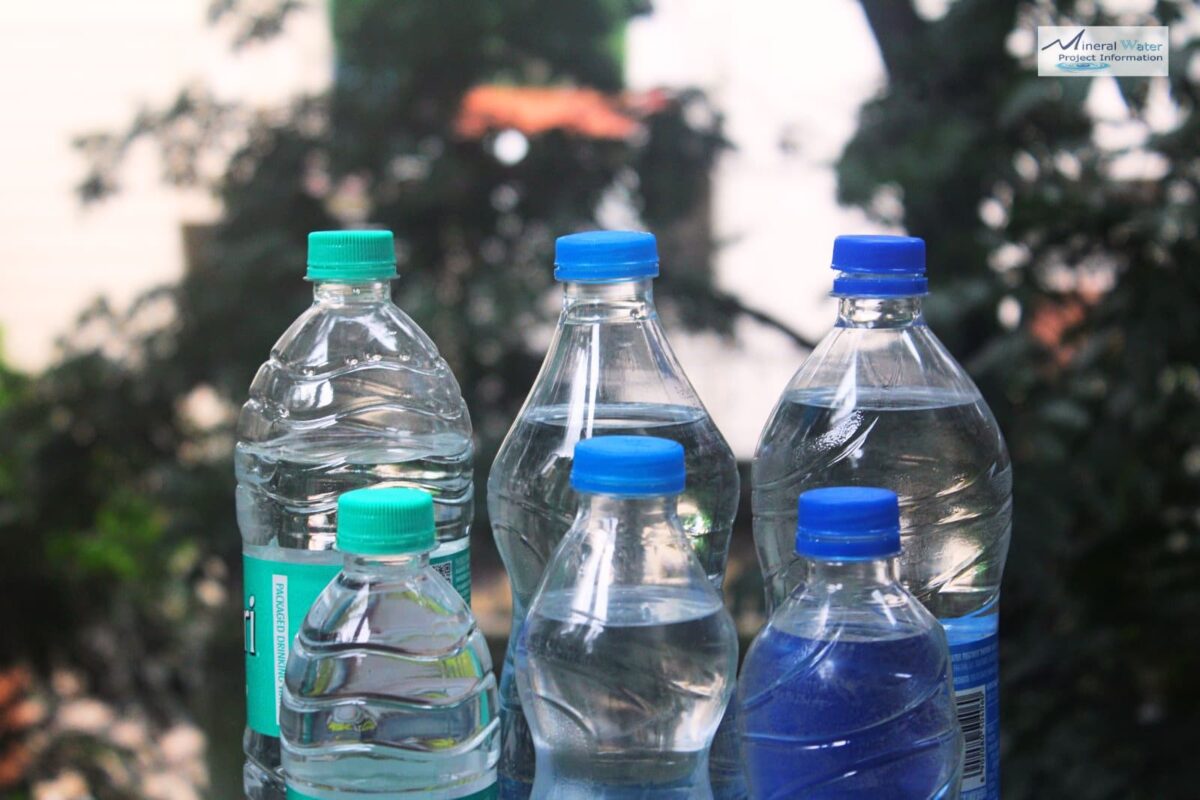
August 2026 | Author :- Soumitra If you understand HINDI, there is already a Video on Youtube Before Going to Bottle Cap Sizes.. There was a question on the youtube community as to why we don’t see much variation in the bottle sizes in terms of volumes. In other words the questioner was asking why […]
Calculating Working Capital for a Mineral Water Business
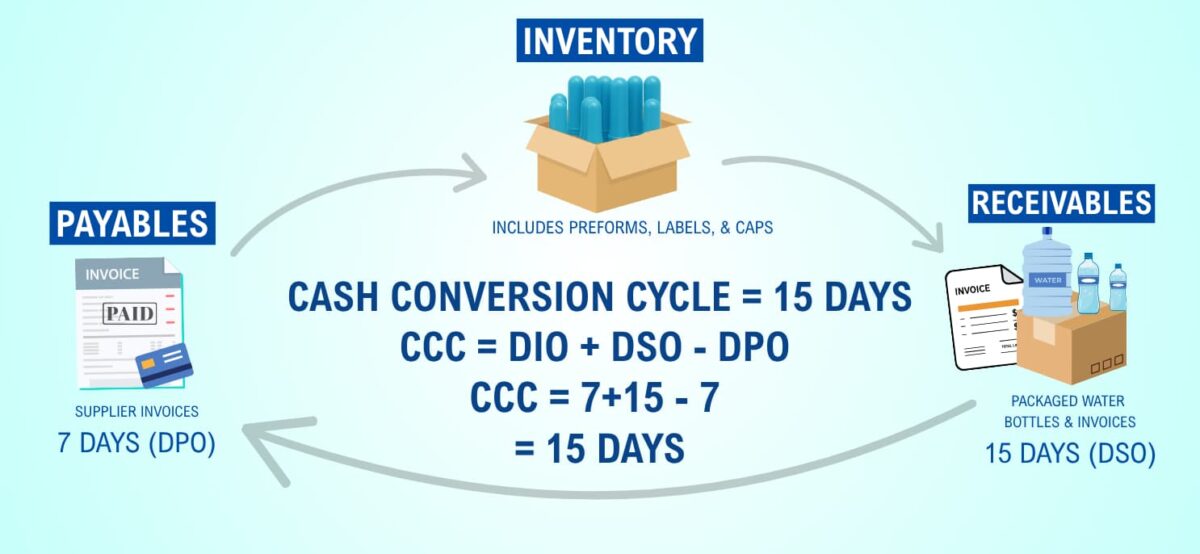
Created July 2026 Most businesses shut down because they run out of working capital. Mineral water plants face the exact same risk. Steps to Arrive at Working Capital Required for a Mineral Water Business Assuming it is a Production Unit, the amount of the working capital depends upon the Plant Capacity. Banker’s Insight: The Role […]
Deciding Price for a Mineral Water Bottle
July 2026 | Soumitra Designing your Mineral Water Bottle Pricing Strategy can increase your profits. Not clear with what we say ? You can read the full post, and you can also go through the video for Hindi. We also have a HINDI Video for this post It’s Leader Decided It’s more or less a […]
Should a Packaged Drinking Plant have in-house Lab ?
The straight forward answer to this question is : NOT Mandatory. FSSAI, the chief regulator doesn’t anywhere say that you should have a lab. Hence, is it mandatory ? NO. Packaged Drinking Water Plant should have an FSSAI certificate now, it’s mandatory. ISI issued by the BIS is not mandatory. But you can have one, […]
The True Cost of Production for a Mineral Water Plant: An Indian Reality Check
The Real Math: Cost of Production Per Bottle (Indian Scenario) To understand how a plant actually makes money, you cannot look at a single bottle in isolation. You have to assume a fixed period and a specific production volume. The data below is based on a realistic Indian manufacturing plant operating 25 days a month […]
Why Solar & Rainwater Harvesting should be the First Steps in Modern Plant Layout
If you are searching for a “Mineral Water Plant Layout PDF,” you are likely looking for a shortcut. But a drawing without a strategy is just a piece of paper. In the 2026 regulatory environment, a layout is no longer just about placing machines; it’s about resource engineering. Carefully designed Layout is the First Thing […]
Packaged Drinking Water License Cost in 2026: FSSAI vs. BIS (The Complete Guide)
By Soumitra | Updated: October 2026 The 2026 Regulatory Shift If you are planning to start a packaged drinking water plant in 2026, the first thing you need to do is ignore the old advice. For decades, the “ISI Mark” (BIS license) was the gold standard and a mandatory requirement. But Wait ! There is […]
Review : Food & Drink Processing Expo 2025 at Coimbatore
Overall for Water Business There was an exhibition at Coimbatore, organised by Synergy Exposures & Events. The dates were 2nd to 4th July 2025. There were 5 Halls in all. However, Hall D was the hall about machinery & which happened to be the important of all of these. As far as the Bottled Water […]
Launch Your Water Brand with Zero Plant Cost: The 2026 Co-Packing Framework
Copacking is an economy option to start your own water business
Bottled Water & Plastic Ban : An update (Sept 2020)
Bottled Water & Plastic Ban Bottled Water Industry uses Plastic heavily. In a bottle of water it’s 100% Plastic, besides water. Last year, since the 15th August 2019, the industries concerned with the single use plastic (PET bottle is also a single-usage plastic), came into danger of existence. Govt has created certain Policies As there […]
Plastic Ban & Mineral Water Industry in India
Background First, on the independence day, 15th August 2019 followed by second speech by P.M. Narendra Modiji declared intentions of getting out the Single-Use Plastic from India by 2022 in a phased manner. It included the PET bottles too, which are used by almost 100% of the Mineral Water producer industry. The reaction came as […]
2026 Alternatives to Plastic Water Bottles
Last Major Regulatory Update: March 12, 2026 “A pessimist sees the difficulty in every opportunity; an optimist sees the opportunity in every difficulty.” Winston S. Churchill Sustainable Water Business 2026: Plastic Alternatives & ROI Guide. In 2019, the industry was bracing for a “Plastic Ban.” Today, in 2026, the landscape has completely transformed. It is […]
What is Packaged Natural Mineral Water Actually ?
Money is in the upmarkets now. Make your water different from others & increase profits.
Case Study Tata Water Plus
Tata Water Plus While moving in Chennai, at Murugan Idli near Egmore, I asked for “Bisleri” water; which has become a slang for Pure Water in India. Asking for Bisleri is telling the guy like “Please give me pure, good,safe hygienic bottled water“. Obviously, whichever brand he serves is acceptable. However, a little better informed […]
From Jan 2024, We have stopped Offering any kind of service into this Business. In case someone wants training material, we are offering it for Free. Kindly refer to this Video :- https://youtu.be/9NbDExIfvHE?si=cWWl1STihl1fA8h_
Challenges and opportunities for the Bottled Water business in India (2020)
Covered Sub Topics :-
- Introduction to the subject
- The Bottled water industry in India
- ISI Standard for Packaged Water
- Current Scenario
- Production Process
- Water Treatment
- Bottling
- Quality Control (Labs)
- Distribution & Sales Channel
- Growth in the Pure Water Demand
- Impacts of the Plastic Ban Announcement
- Is Glass Bottle the real Alternative ?
- Water ATM’s : great future
- Surface Water and Quality Management
- Recycling : The present business opportunity
- Conclusion
- About the Author
The bottled water business in India is over in the second decade now. Sometime back; this was the most “Go to” business for the SME community. However, now, the trend seems to be decreasing. Is this trend going to continue like this? Or this is a temporary wave and shall recoup in some time? What may be the reasons, what will be the future challenges and what will be the required courses of action in which the bottled water industry should make moves?
In this article, we’re going to discuss this in details.
The Bottled water industry in India Still today, in 2020, the bottled water in India is called very loosely like “mineral water” or “Bisleri”. Though the proper name for it is either “packaged drinking water” or “packaged natural mineral water”.Howeve, it is not expected from local citizens to call the bottled water by this technically perfect name. Actually, in 2004, Bottled water was properly standardised in India.
ISI Standard for Packaged Water
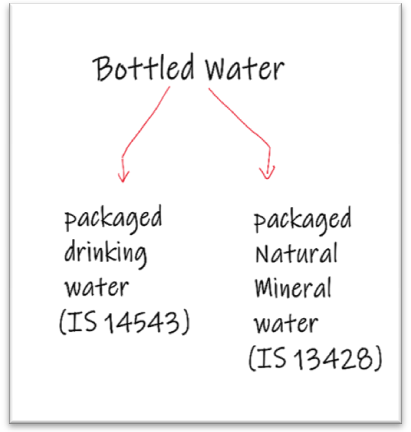
The BIS – Bureau of Indian standards introduced proper standard for bottled water; and allocated 2 separate standards for 2 sets of water. IS 13428, is called as Packaged natural mineral water, applied to water, which isnaturally, at source itself, confirming to the standards set by the BIS (without need to remove the TDS#). Whereas IS 14543, is called as packaged drinking water, which doesn’t these contents present naturally. It’s modified by first removing all the dissolved solids from the raw water and adding the required ones externally.
#TDS is the quantity of dissolved solids in water, which are very fine in size, and can only be removed by RO membrane.RO membrane is a kind of screen cloth or mesh which removes finest TDS. These dissolved solids in the raw water or source water contain dissolved minerals. These minerals may be present in various types and the quantity of each of them may vary from source to source. At water testing labs, these tests can be conducted.
Current Scenario (2020 March) Currently (2020), there are nearly 6000+ packaged drinking waterunits(PDW), and just 25+ natural mineral water units(NMW) in India. State wise, Tamilnadu has maximum units; due to the poor quality of raw water. Maximum natural mineral water units are present in Himachal Pradesh.
The production process in brief
The Water Treatment
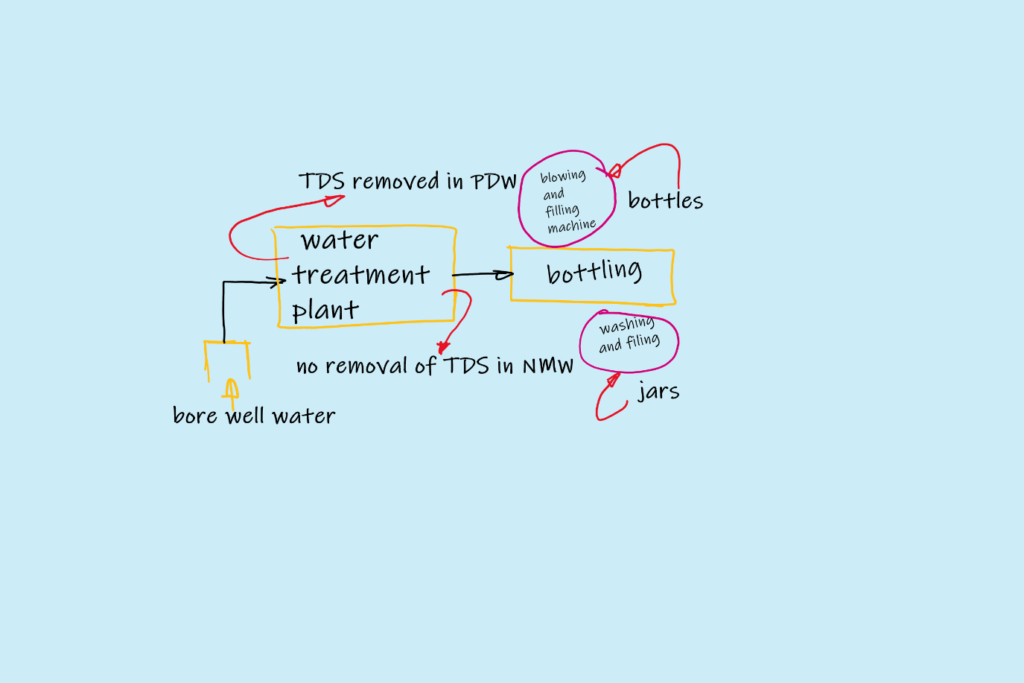
In both the cases, irrespective, whether it’s PDW or NMW; some processes are common, like the prefiltration. It consists of removing the turbidity (mechanical impurities), odour and colour from the raw water. Even the post flirtation process like UV and ozonation. Difference lies in removal of TDS in case of PDW with the help of RO membrane, which is not observed in case of natural mineral water. It is UF ultra flirtation membrane in case of NMW.
Bottling
After treatment, water travels to the bottling and packaging sections. If the unit produces just the 20 ltr Jars, it doesn’t have a blowing setup; otherwise most of the units do have a PET Bottle blowing setup, if they’ve 1 ltr or smaller bottles in their product mix. The Blowing Setup is nothing but a set of machines and equipment required to produce the bottles from PET performs. These Preforms are small bottles which are blown with air to make big bottles. The Preforms are made from PET granules. PET is a kind of plastic. Usually bottled water units do not produce performs, they source these from preform manufacturers/suppliers.
The Quality Control
The BIS has laid a complete process right from the source to the final packaging and storage, which leads to complete quality control of the packaged water. It consists of monitoring and submitting records to the regional offices of the BIS. BIS officers have authority to pick up random samples anywhere, anytime and apply “STOP” marking, which means stoppage of the production from next moment. The units need to maintain separate chemical and microbiological labs for this purpose with dedicated technicians.
Distribution and sales channel
This business is through distributor and retailer channel. The unit owner sells the goods to the distributor, and he/she sells to retail shops. The retail shops sell to consumers. Sometimes, the producer may also sell to the retailers directly if he’s the nearest vicinity to save margin. D2H meaning direct to home can also be implied.
The growth in the pure water demand
There’s a great demand for pure drinking water across India. Earlier, people used to drink the well water very easily, but nowadays due to awareness of health and hygiene, people do care about the purity of water. There may be water filters or even RO stations in institutions, factories etc, but people still believe that the bottled water is the best, most pure form of water around. And the convenience of it to carry it around (thanks to PET bottles) makes it super “go-to”form.
On the other hand, offices too prefer the jar bottled water, coupled with the bubble top dispensers with hot/cold taps, to make it very convenient for the workmen. Here again, the bottled water is most popular, May be in 20 ltrvariety.
This all scenario made bottled water a super business to seek for, at least till August 2019.
And then, arrives the announcement
Then, on the Indian independence day, 15 th August,2019, prime minister Mr Narendra Modi came out with an announcement of banning single use plastic from 2022, which would kick off from immediate effect. He also confirmed that the detailed policy will be ruled out on the occasion of Gandhi Jayanti, the birth day of Mahatma Gandhiji, who, besides being a world leader, also enjoys reputation of being a priest of clean IndIa. The date declared was 2ndOctober, 2019, which was just a few days away.
It did come as a shock moment
Yes, it WAS a shock. Though everyone knew that there’s replacement to the PET Bottle, still, everyone, concerned with plastics (not just bottled water) was shocked. And there were reasons for it. Let’s quickly see what were the reasons of the panic ….
- Everyone knew at the bottom of their minds that this was to happen one day, but when it came, it was like a bomb she’ll.
- It was more so, because of the person who’s making the announcement. (Modiji) enjoys the repute of implementing huge, big decisions. The way he’s implemented GST, De monetizing and RERA etc.
However, what happened on the d-day ….
But, to everyone’s surprise, nothing major came out on 2nd October. There was not even a mention about the same. Even after 3-4 months, in the union budget 20-21, nothing special was announced.
But it did impact the concerned industries badly
Though there’s no major decision in this regards, there has been a tremendous downfall in the overall growth , at least initially. And the bottled water industry was no exception to this phenomena. People had become sceptical about investing in this industry. The demand of the plastic bottles were going down. The 20 ltr jar demand looks fine enough, but bottles demand fell down.
The current (March 2020) situation …
At present, there’s a downfall in willingness of entrepreneurs entering in this field, however, it may not be just because of the plastic ban thing, but might be also due to the overall slow down. In light of the approaching summer too, the things don’t look too exciting in terms of demand. However it looks like that the market will soon catch up; may be slowly and steadily. Here’s analysis of the trends in this space (water business) for the upcoming future…
Glass bottles : Is it the workable alternative ?
- There is a downfall in the demand of pet bottles, and this is from the awareness of people, consumers, it will tend to fall down. People are keenly looking to avoid plastic from their daily usage as much as possible.
- The Institutional buyers such as corporates have started insisting on solutions beyond PET bottles. Currently, as there’s no alternative besides Glass bottles; glass bottles will be in a good demand.
- The glass bottle manufacturing industry has to come up with economical solutions to package 500ml and smaller bottles. The bottles used for flavoured milk can also be thought upon. At present HNG, the largest manufacturer of these bottles has already come out with an option.
- The AIGMF (all India glass manufacturers federation) has already started spreading awareness about this, however, are still to find out a workable business model which will offer the convenience of bottle handing.
- It’s the new generation of innovative entrepreneurs who will need to take some good steps to invent a new, commercially viable business model. This model should offer the convenience of carrying the PET bottles, yet completely avoid the PET, by replacing the same with glass of alternate material (which is yet to get developed)
- Will the public revert to the old habits of using reused glass bottles ? If yes, then will BIS allow the reused bottles for filing water ? This practice is currently in use for the 20 ltr Jars, but not applied to bottles. This way, there will be avoidance of PET and drop in over spend due to glass bottle high cost.
- Many government offices have ordered stoppage of using PET bottles. Still, the office bearers prefer to carry their own bottles from their houses, although there are water vending machines installed with RO and chiller. This is because of the poor cleanliness standards maintained of these equipments. The demand of the steel bottles will be on the rise. Newer options like clay bottle can also be thought over. Notable point is : Nobody is keen to carry glass bottles.
- This may open opportunities for the small budget players who may come up with a D2H model for delivering glass bottles directly to the consumers omitting the existing distributors supply chain. Local franchise model can also be thought for capturing this opportunity.
Vending machines : Excellent Future
The vending machines or the water ATMs segment has a truly tremendous potential in India, provided these ATMs generate enough confidence in the consumer’s mind about the quality of water they deliver. Currently, though the machine design is excellent, the maintenance is very poor at the public places. This keeps the quality conscious user away. The majority of these water ATMs are installed either by the IRCTC (Indian railways) or by the local state governments. This space needs A very precise attention. I’m sure, some big corporate will catch this huge opportunity and you’ll see same ATMs like the money ATMs, may be branded water kiosks soon where entry is restricted like an ICU or through a special vending person.Already, there are some models established in this space, and many entrepreneurs will keep on inventing.
Opportunity in Surface Water and Quality Management
On the other hand, if people insist on their domestic water, the government bodies also need to assure that the quality of water which they supply is of reliable quality. Considering 70 % of world population will be living in cities, this will be a huge challenge; and an equal opportunity to work with government to handle such a huge water demand. There will be tremendous opportunities in field of ground water management, conversion of water water to potable, rainwater harvesting, improving the quality of existing RO systems etc.
Current Word : Recycling
There was a news that the Delhi-LucknowTejas express serves bio degradable bottled water to the train travellers. However, I couldn’t gather much evidence to support this. There’s a good amount of research going on in this space; however,a solid, dependable and scalable solution is still waiting in the corridors. Till the time the RECYCLING will be a major issue on which the government shall be focusing on. In this, it has rolled out the PWM rules (plastic waste management rules) which makes it mandatory for all plastic waste generators (which include the bottled water producers) to get the produced plastic recycled. They should have a proper policy for this. It’s called as the EPR = extended producer’s responsibility.
The Bottled water producers are not facing much heat at present, as the government bodies, the CPCB, through local is local state wise offices, are focused on the carry bag generators first, which are the major culprits. However, slowly and steadily they WILL arrive at the doorsteps of the bottled water producers.
The conclusion
With growing awareness in the citizens, the demand for PET bottles will keep decreasing. However, the pure water business will keep flourishing. We may observe a decrease of the bottled water factories as a correction factor, but those with sound financial management will survive. We shall see different business models emerging and more players in water distribution, not production.
However, these are approximations, and not any final conclusions. Readers are free to interact on this article through the doubts, queries, sharing etc.
About the author :-
Water business consultant and trainer having huge experience of over 17 years in water industry. Go to website.