Categories
Mineral Water Business Mineral Water Business Profit

Is Mineral Water Business Still Profitable in 2026? (The FSSAI “High-Risk” Reality Check)

Yes, This Business is Still Profitable in 2026 also !

Table of Contents

Defining the Product: Why “Packaged Drinking Water” is the 2026 Gold Mine

Most people use the term “Mineral Water Plant,” but technically, we are almost always talking about Packaged Drinking Water.

In 2026, understanding this distinction is the difference between a failing amateur and a profitable professional:

  • Packaged Drinking Water (The Volume Play): This is produced from any groundwater source. We use the Reverse Osmosis (RO) method to strip dissolved minerals and then scientifically re-balance them for taste and health. This is the standardized scalable model most plants in India follow.
  • Natural Mineral Water (The Niche Play): This is rare, location-specific water that is balanced at the source itself. The costs, source-water protection, and FSSAI regulations for these are entirely different from standard plants.
    Strategic Resource: If you are specifically looking to bottle water directly from a natural protected source without RO, read our deep dive here: What is Packaged Natural Mineral Water Actually?.

The 2026 Strategic Shift

While the bottling and packaging methods remain similar, the regulatory environment has changed ( From BIS to FSSAI High-Risk Category ). As an investor, you aren’t just selling “water”; you are selling Certified Safety.

Expert Insight: In 2018, having a standard RO plant was sufficient. In 2026, your profitability is strictly indexed to your FSSAI High-Risk Compliance. If your plant architecture lacks Sanitary Design principles—such as CIP (Clean-in-Place) compatibility, microbial-resistant surfaces, and automated batch-traceability—your “profit” will be liquidated by compliance penalties and high frequency of sanitation downtime.

Profitability for the Plant Owner: Why MRP is a Mirage

One of the most dangerous mistakes a new investor can make is calculating ROI based on the Maximum Retail Price (MRP). While the consumer pays Rs. 20 (or Rs. 18 post-GST adjustment) for a 1-liter bottle, that figure is mathematically irrelevant to your manufacturing profit.

To understand your real margins in 2026, you must look at the Ex-Factory Price—the price at which you sell to your distribution network.

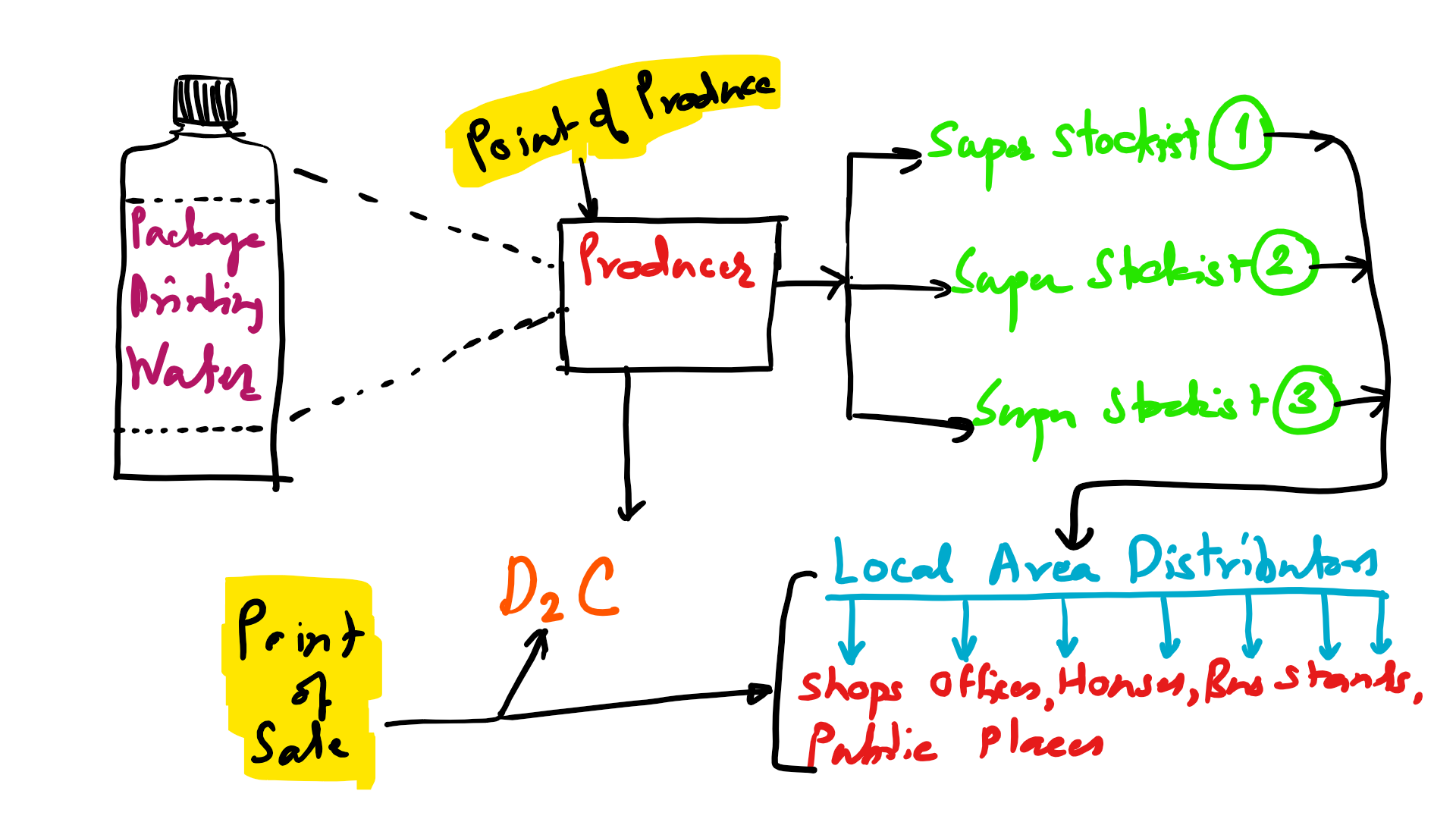
The 2026 Distribution Reality

Your profitability is distributed across a multi-tier channel:

  • Super Stockist: Usually handles an entire city; they buy at the lowest price point directly from you.
  • Distributors: Appointed by stockists to cover specific zones.
  • Retailers: The final point of sale (hotels, shops, malls) that realizes the highest margin per unit.

Technocrat Note: As a producer, you often earn the least per bottle compared to the retailer. Your profit is a function of Volume and Operational Efficiency, not the retail price tag.

Increased Capital & Operational Pressure

The 2026 landscape has shifted the financial “Breakeven Point” (BEP) due to two primary factors:

  1. Capex Inflation: To stay competitive and compliant with the “High-Risk” FSSAI mandate, plants now require higher-capacity, automated machinery to lower the per-bottle labor and utility cost.
  2. Opex Sophistication: Tight monitoring of “Money Leakages” is now mandatory. Winners in this space are implementing ERP systems and Real-time Monitoring to maintain margins while MRP remains stagnant.

High Margin Revenue Streams for 2026

Co-Packing & White Labeling: Producing for the HORECA segment ( Hotels, Restaurants & Cafes or other private brands who sell under their own name. This allows you to utilize your plant’s full capacity without the marketing overhead of a new brand.

Check the Playlist below

B2G (Business to Government): The Institutional Profit Model

While most entrepreneurs focus on the crowded retail market, the most stable profits in 2026 lie in Government Partnerships (B2G). Partnering with state entities like MSRTC allows a local plant to shift from “selling” to “supplying,” ensuring 100% machinery utilization and guaranteed monthly volumes.

Key Highlights of the B2G Segment:

  • Massive Volume: Move lakhs of bottles through established networks (Railways, Transport, Tourism) without individual marketing costs.
  • Brand Authority: Using a co-branded label (like the Nath-Jal model) grants your plant instant trust and a “Quality Shield” against local competitors.

Case Study: The Nath-Jal Blueprint Watch the video below to see how a Pune-based unit scaled through an MSRTC partnership. We cover the exact “how-to” of these institutional tie-ups in our [Advanced Training Program].

Glass Bottling: A premium, eco-friendly segment growing rapidly in the hospitality sector. This is the ultimate “Reliance-proof” model because it targets a segment that values sustainability over the lowest price.

Technical Preview ( Short )

Operational Efficiency: The 2026 Profit Multiplier

In the 2026 “High-Risk” regulatory environment, profit isn’t just about what you sell—it’s about what you don’t waste. With increased scrutiny from FSSAI, a single documentation gap or failed batch can wipe out your quarterly gains.

The “Zero-Leakage” Strategy To survive the price pressure from massive entrants like Reliance (Campa Sure) at Rs. 15 MRP, your plant must operate with surgical precision:

  • Real-Time Monitoring (IoT): Tracking electricity consumption and water rejection rates; an RO rejection higher than 30% is a direct hit to your bottom line.
  • Inventory & Batch Traceability: Automated systems for preforms and caps are now mandatory to prevent the 3–5% margin loss common in unorganized plants.
  • Labor Optimization: Transitioning from manual loading to semi-automated conveyors reduces breakage and lowers the “per-bottle” labor cost needed to compete in the current market.

Diversifying Your Revenue Streams

As discussed in the “High Margin Revenue Streams” section above, relying on a single brand or a passive distributor model is no longer a safe bet. To truly maximize the operational efficiency of your plant, you must utilize your capacity through specialized, high-margin models.

The 2026 Unit Economics: Can You Survive a ₹15 MRP?

To compete with massive entrants while maintaining a professional, “High-Risk” FSSAI-compliant facility, your unit economics must be surgical. Below is the 2026 Benchmark for a standard 1-liter bottle (19g preform) produced in a 2000 LPH plant.

The Cost-Per-Bottle Breakdown (1 Litre)

  • Raw Material & Consumables: ₹4.00 (Includes preform, cap, label, and shrink film).
  • Operational Overheads: ₹1.50 (Includes electricity, mandatory monthly lab testing, and FSMS compliance).
  • Total Cost of Manufacturing: ₹5.50 per bottle / ₹66 per case (12 bottles).

Technocrat Warning: If your current or planned plant exceeds ₹6.00 in manufacturing cost, you are at high risk of being priced out of the retail market by 2027. Success in 2026 is about Volume Efficiency and Money Monitoring.

5. The Final Verdict: Is it Still Profitable?

On the outset, the Mineral Water Business IS profitable because the demand for “Pure Water” is non-negotiable. However, in 2026, “demand” does not guarantee “profit.”

To make YOUR business profitable, you need to move beyond being a machinery operator and become a technical strategist who understands your Break-Even Point (BEP) and ROI.

The “Sincere Informer” Strategy for Success:

  • Achieve BEP within 12 months: This requires strict control over “invisible” expenses like machine downtime and water rejection.

What is a Break-Even-Point

  • Optimize the Product Mix: Do not ignore 20L Jars. They offer lower OpEx (no recurring preform costs) and direct margins that often exceed 30%.
  • Avoid “Least Price” Machinery: Choosing a supplier solely on the lowest quote is the #1 profit-drainer due to future downtime and compliance failure.

Where to Begin?

Why start by repeating the mistakes of failed entrepreneurs? Learn the Aqua-Finance Metrics from mentors with over 28 years of industrial experience.

  • Option A: Professional Training: Master the 2026 FSSAI “High-Risk” framework and learn how to innovate your distribution model.
  • Option B: Technical Consultancy: If you are ready to build, let us audit your technical specifications before you sign a machinery contract.

“Don’t build a plant based on a machinery quote. Build it based on a Profit Matrix.”

⚠️ Strategic Alert: The Death of the “Passive Producer” Model

In the previous decade, a plant owner could survive by simply appointing 5–10 distributors and focusing on production. In 2026, that model is a liability.

With the entry of conglomerates like Reliance—launching Campa Sure at a disruptive Rs. 15 MRP—the “middleman” margin is being squeezed to zero. If you rely solely on traditional distributors, you are competing on price against a giant with infinite “Economies of Scale.”

FAQs About Profitability

What is the average “Cost per Bottle” (Unit Economics) in 2026?

Basic Consideration
– standard 1 Ltr Bottle. Having 19 gms Weight
– 2000 LPH + 30 BPM Very Basic Plant
– Produces 700 Cases per Day ( BEP )
– Purchase + Consummables = Rs. 4 per Bottle
– Overheads = Rs. 1.5 per Bottle
– Cost of Mfg = Rs. 5.5/Bottle, Rs. 66 per Case
We discuss this in details in Training

How Long Does it take to achive BEP ?

Every Plant has a different BEP. The earlier you reach to the BEP the better profitability you can expect.
At the end of 1st year, you should be reaching the BEP, if you maintain a strict control over Expenses.

Which is more profitable : 20L Jars or 1L Bottles?

20-liter jars offer lower OpEx (no recurring preform and blowing costs), with net margins often exceeding 30%.
However, 1-liter bottles have a much larger market share and better brand visibility. A balanced “Product Mix” is often the most stable profitability strategy.
Word of Caution :- Many entrepreneurs totally neglect the Jar Vertical, and just talk about Bottles. Do not forget that 20 Ltr Jars offer you more “Direct” Customers, which reduce your sales expenses to a great extent & boost up your productivity.
– We have many success stories of entrepreneurs who started with just Jars, and now own a couple of factories.

What are the unknown Profit-Drainers ?

The most major of them is Machine Down Time. We have observed entrepreneurs just choose machinery from suppliers offering them Least Priced Equipment.